Goshuincho 4 — Katō Jinja
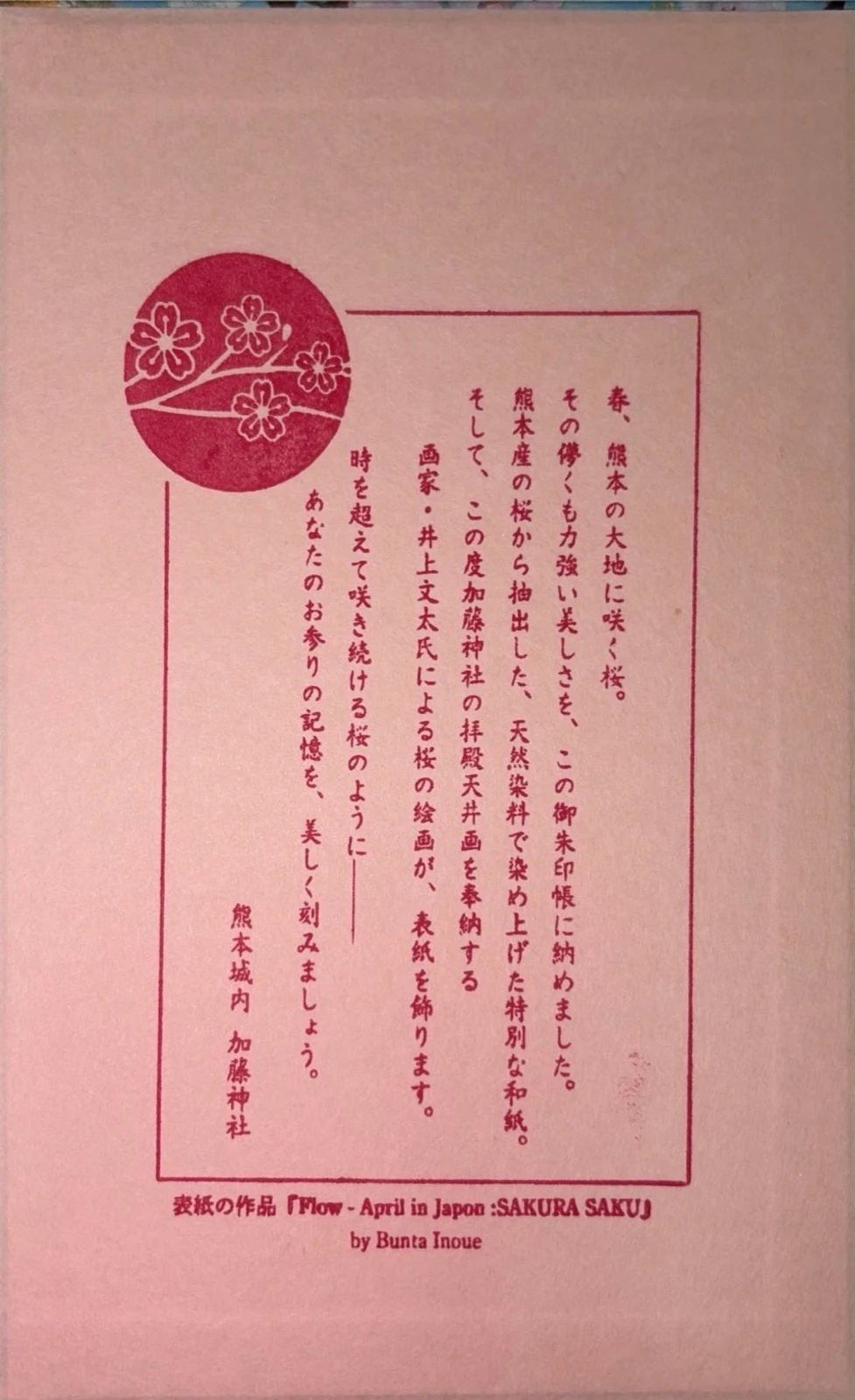
This goshuincho was purchased at 加藤神社 (Katō Jinja) inside Kumamoto Castle's main bailey (本丸). The cover artwork is 「Flow – April in Japon : SAKURA SAKU」 by the contemporary artist 井上文太 (Bunta Inoue), originally painted on cloth using 100% natural cherry-tree dye from Kumamoto-grown cherry trees, and offered to Katō Jinja as a 拝殿天井画 (haiden ceiling painting). The cover here is a printed reproduction of that ceiling-painting offering. Katō Jinja's gold-foil identification seal appears on the back inner cover.
 #00
#00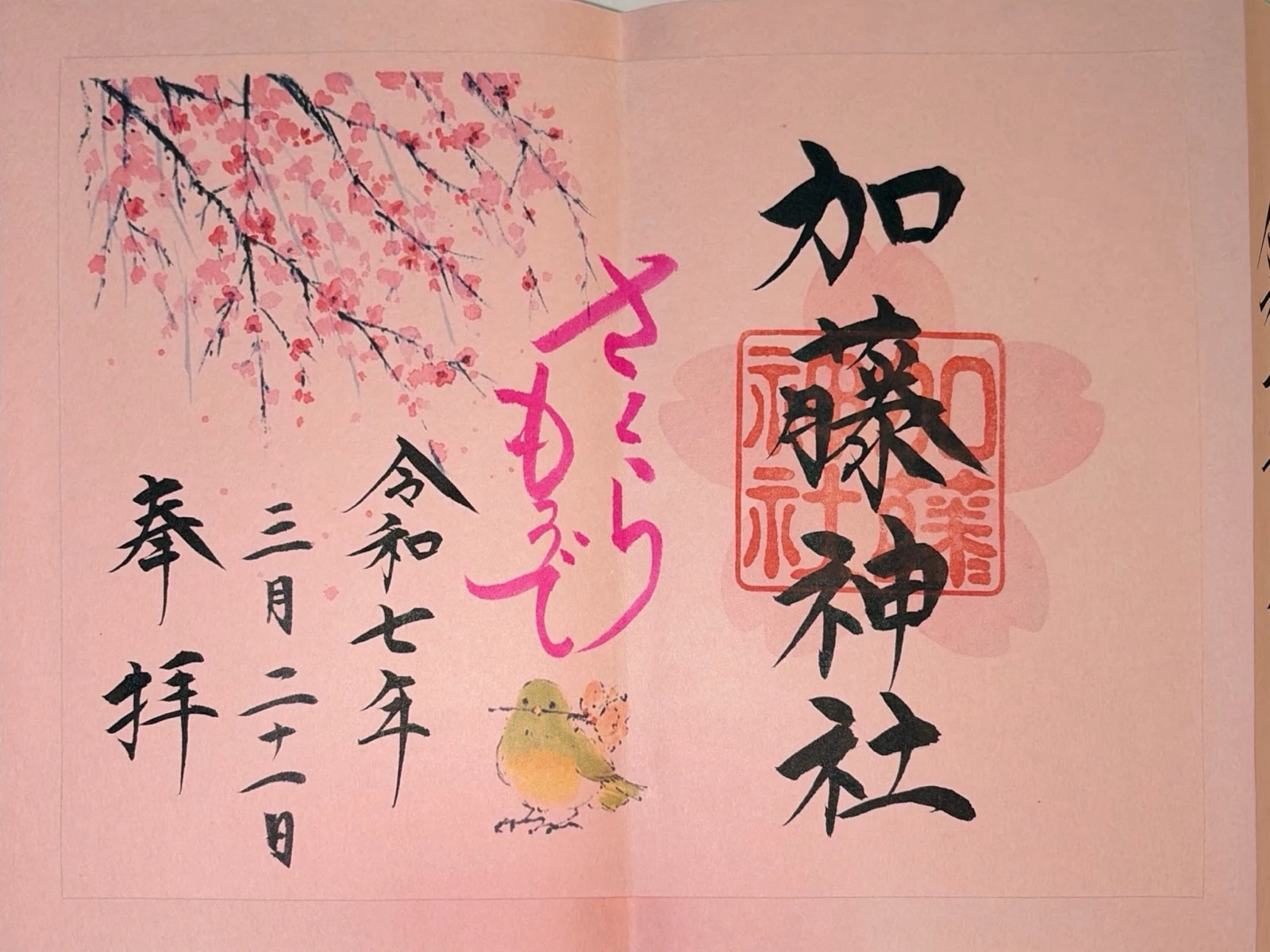 #01
#01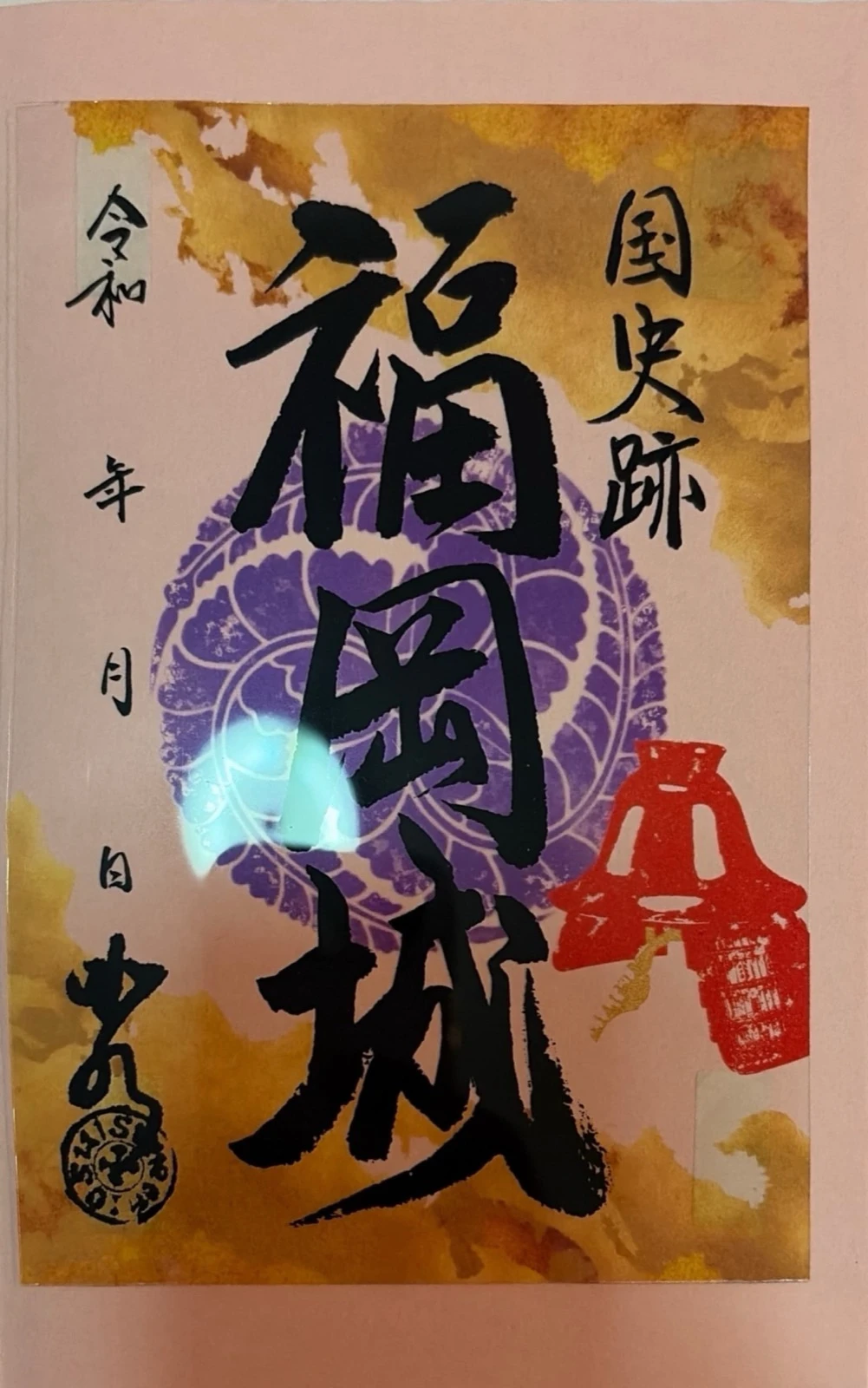 #02
#02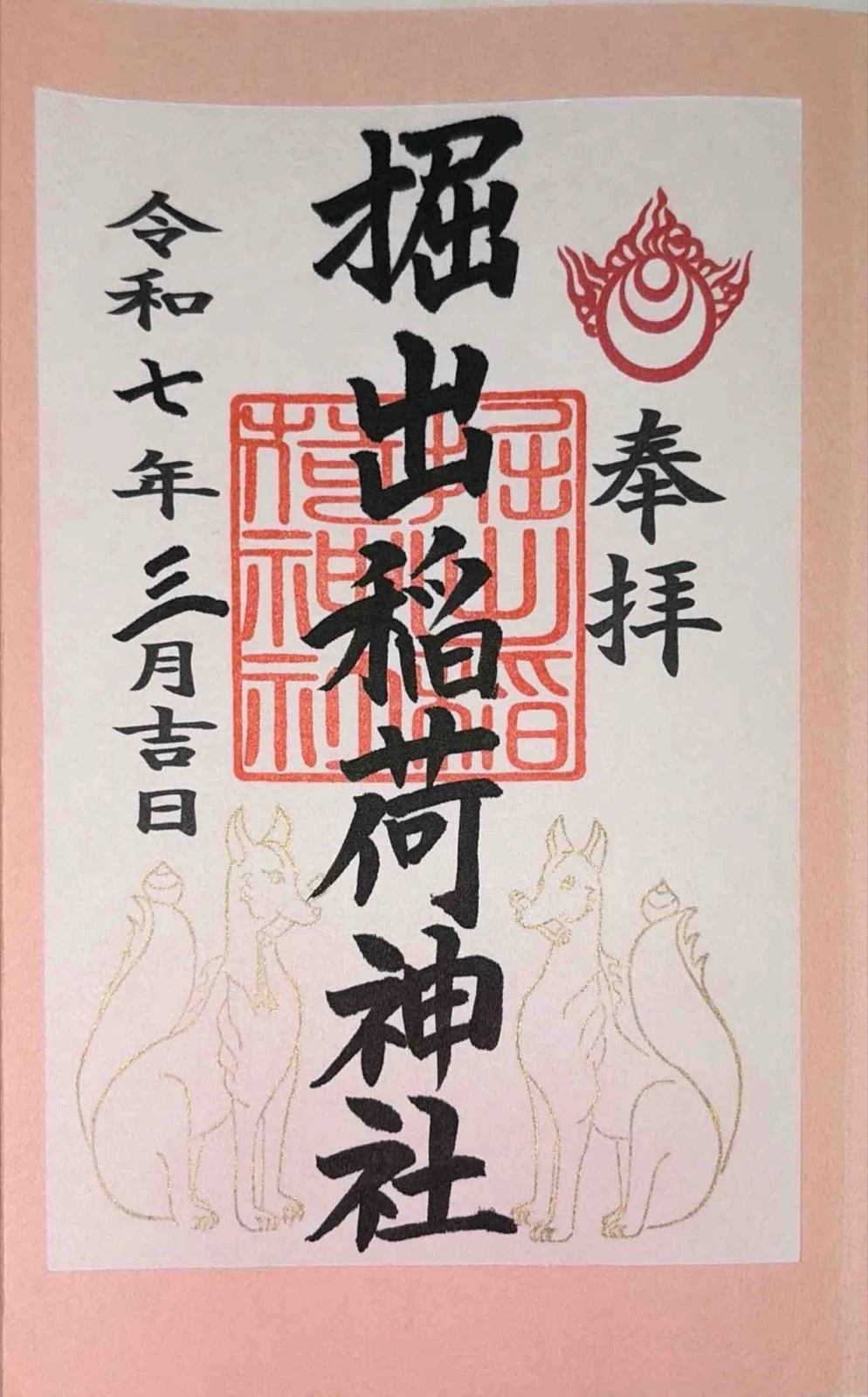 #03
#03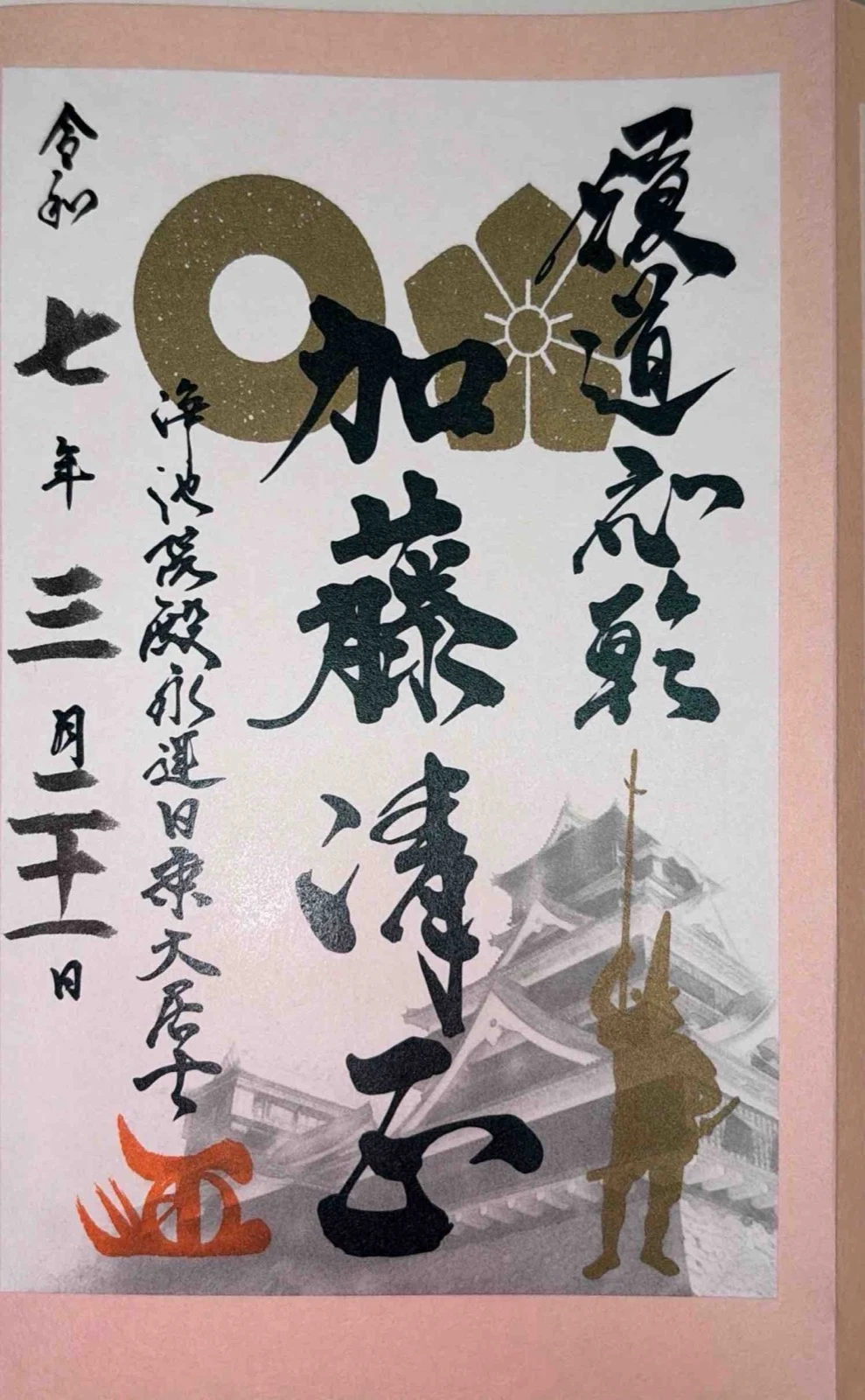 #04
#04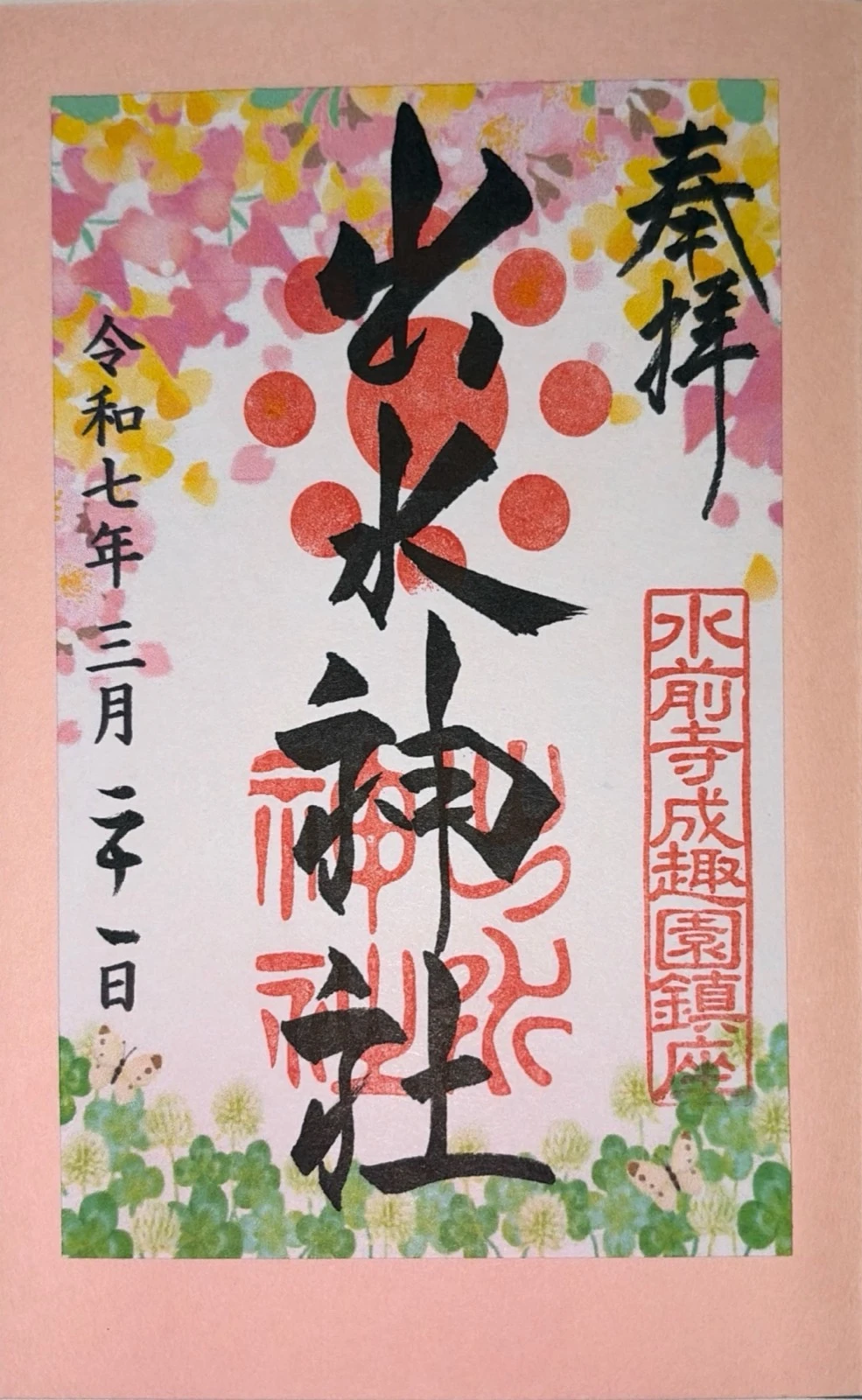 #05
#05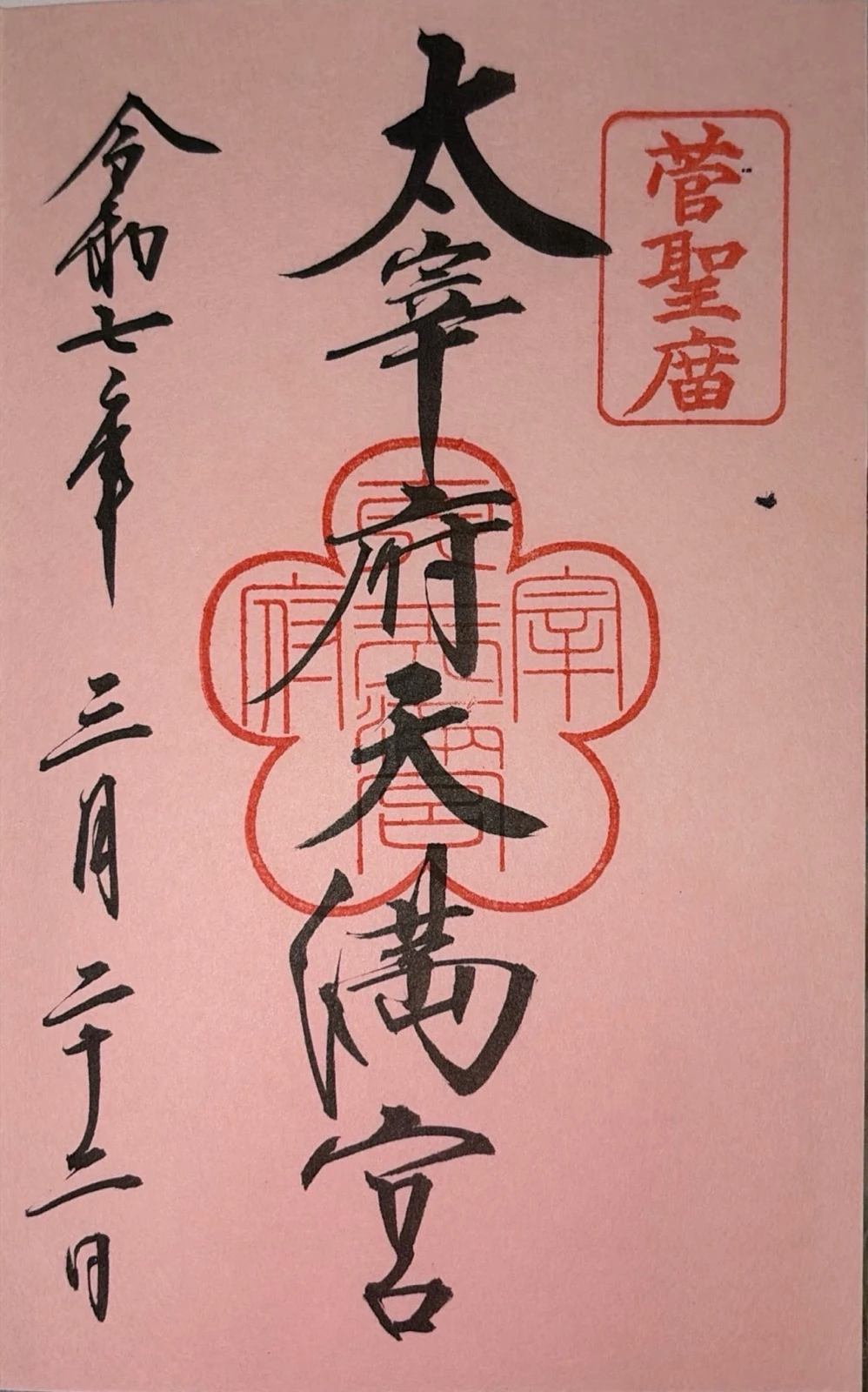 #06
#06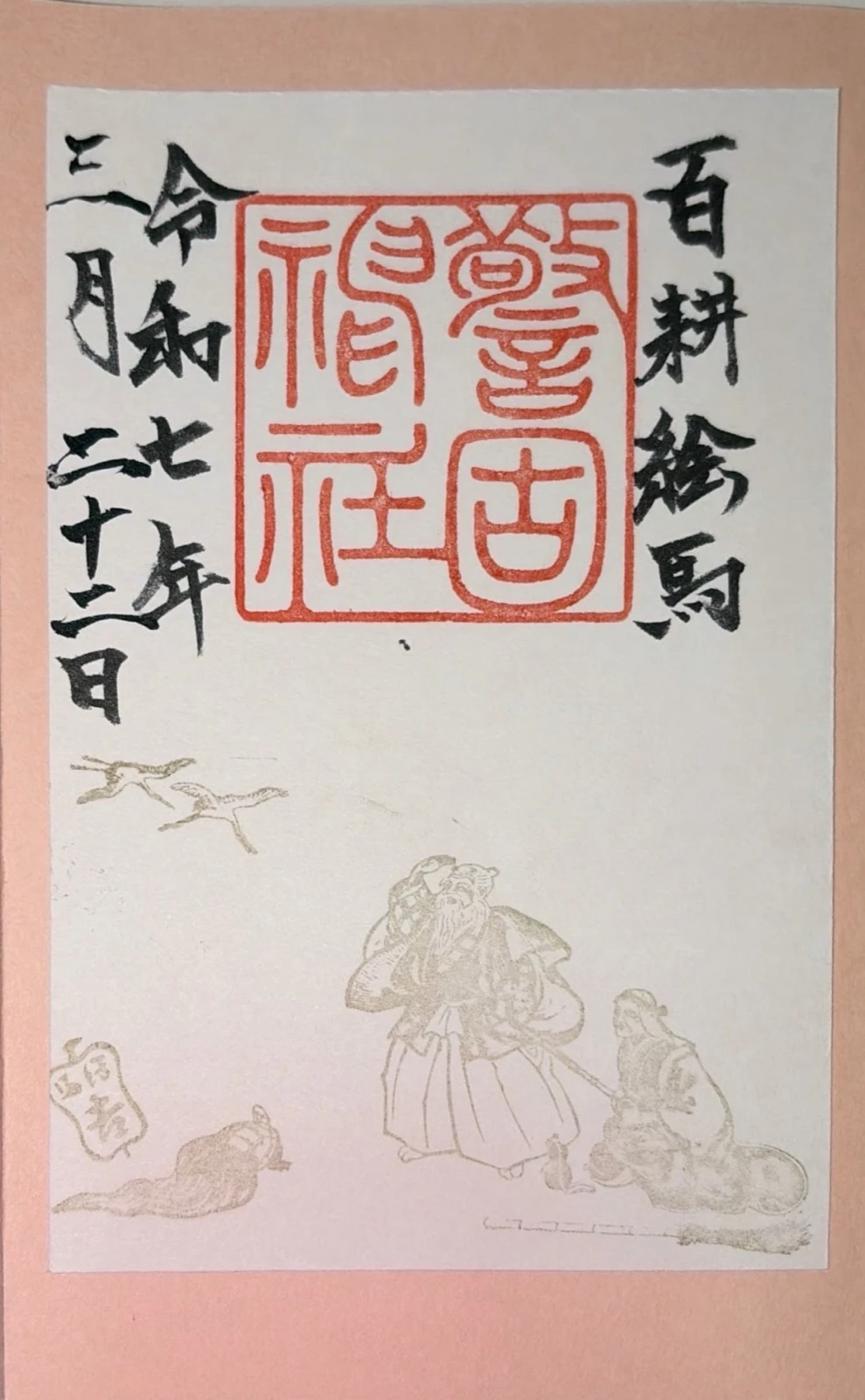 #07
#07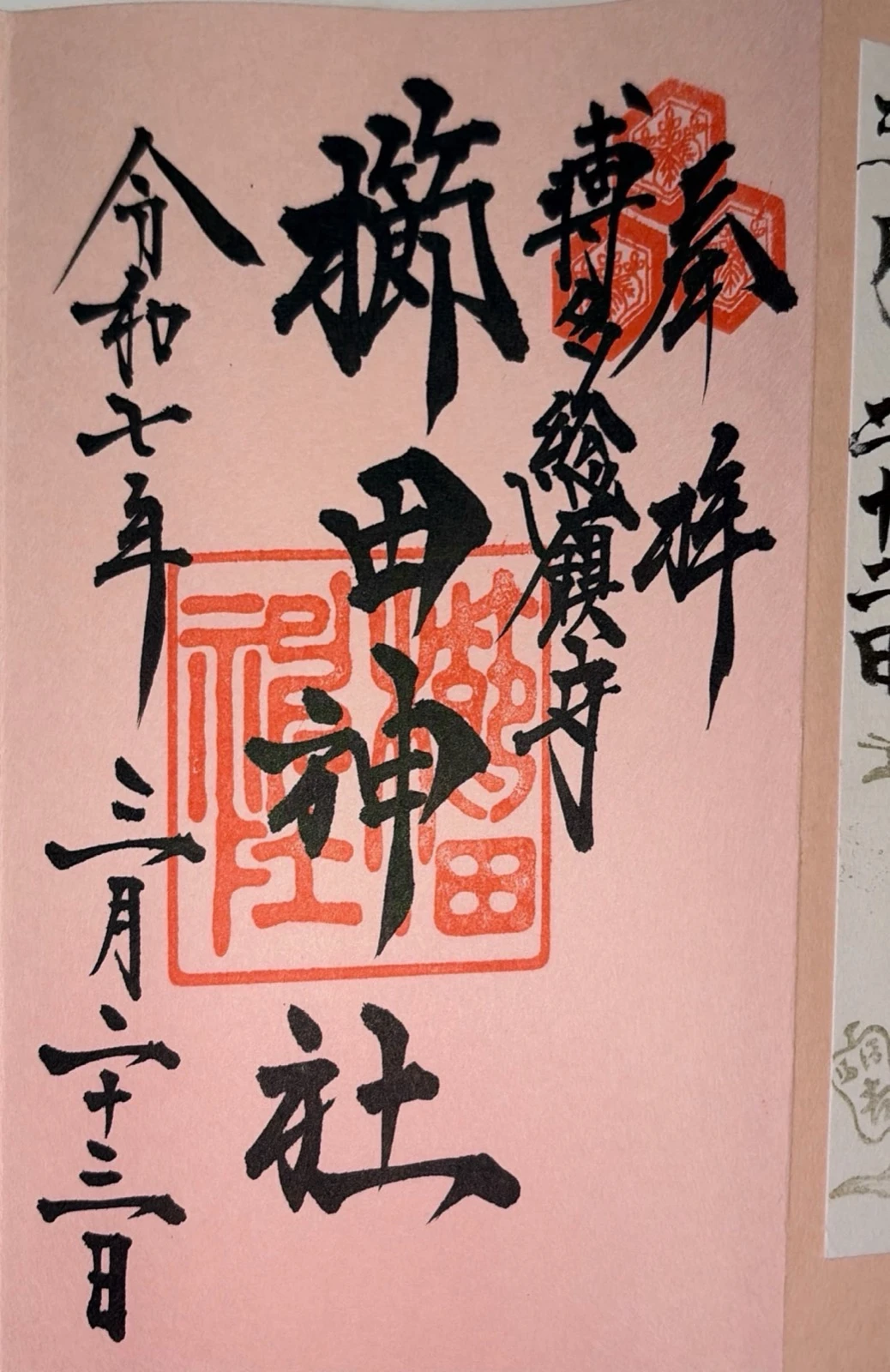 #08
#08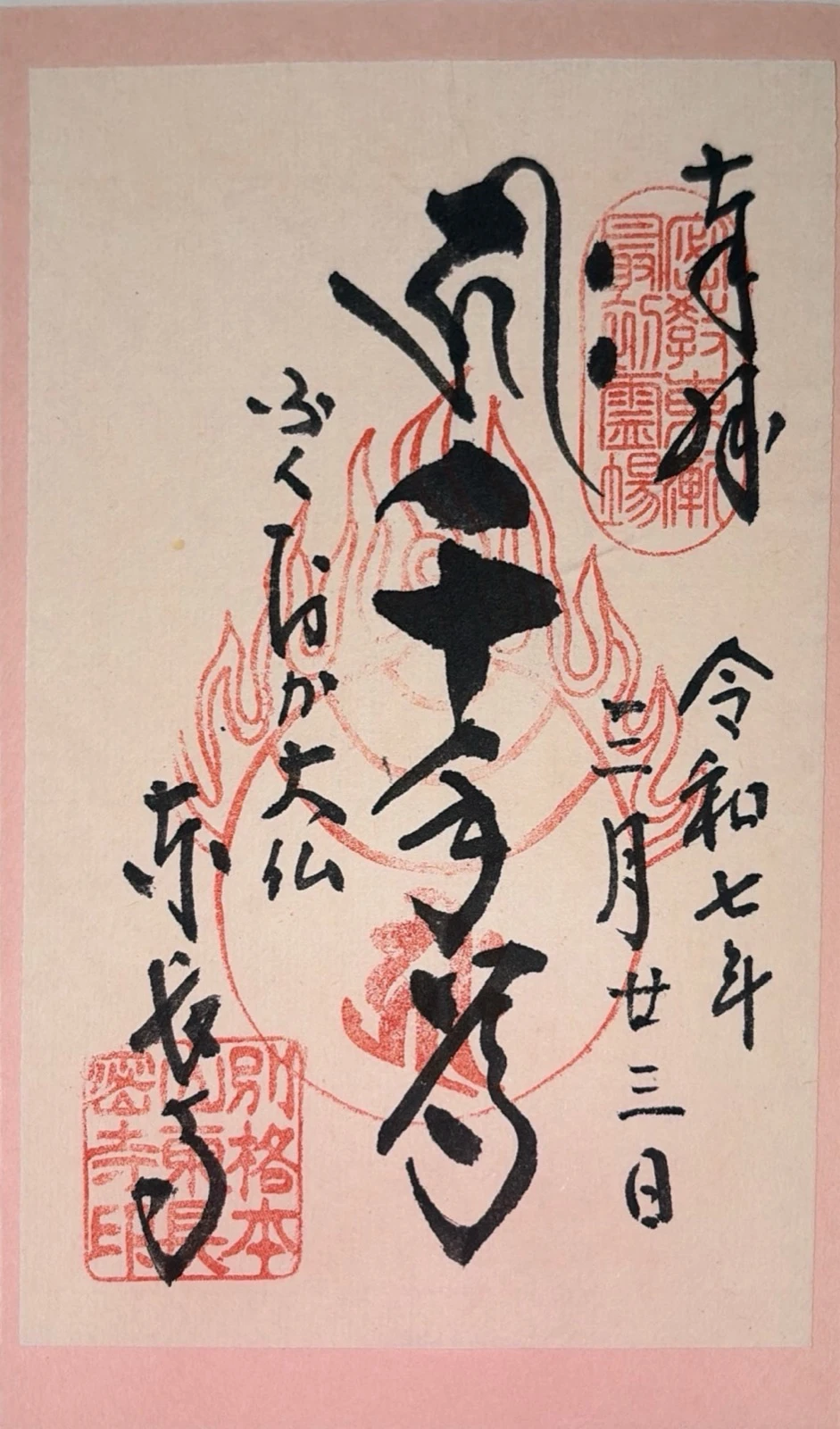 #09
#09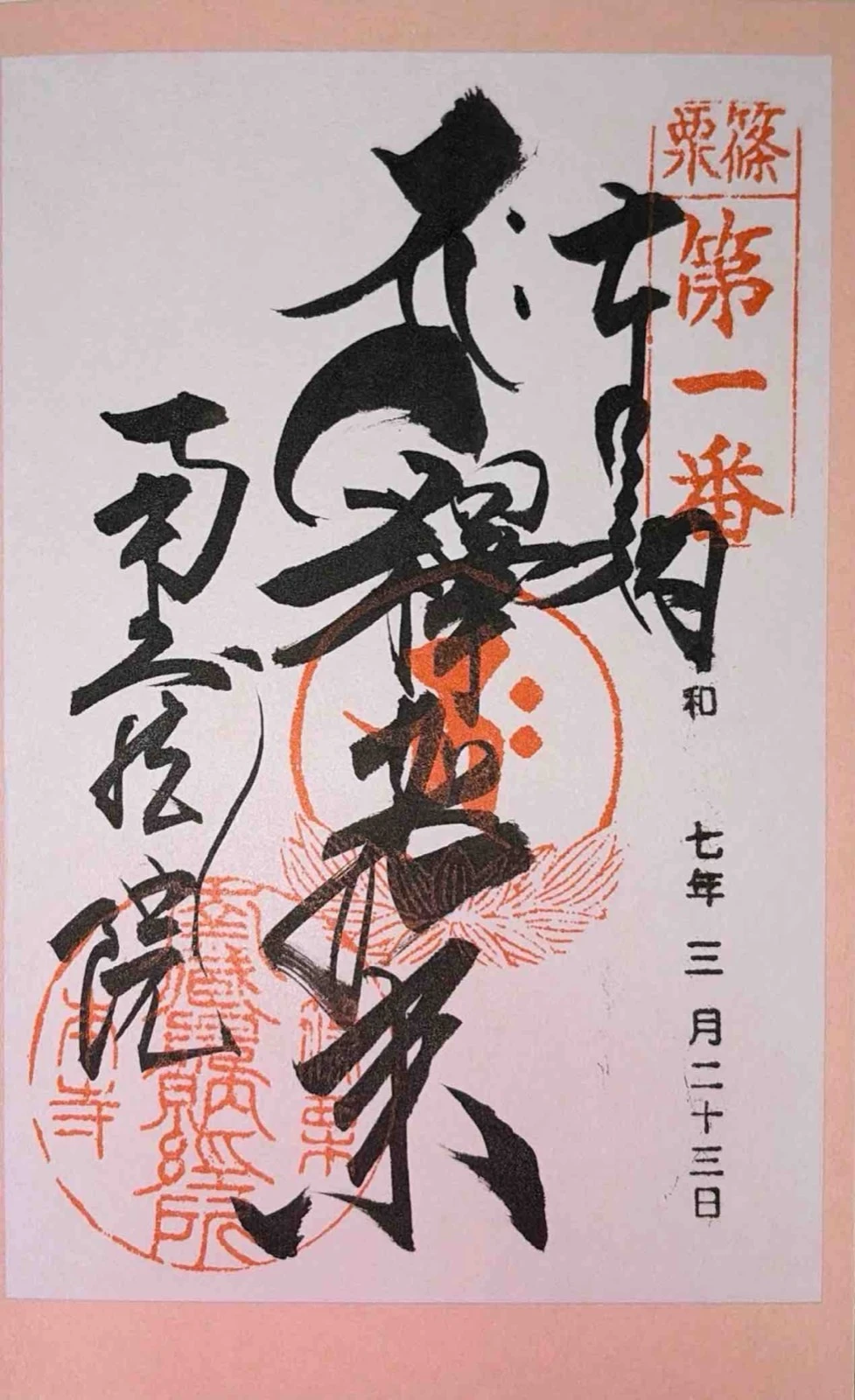 #10
#10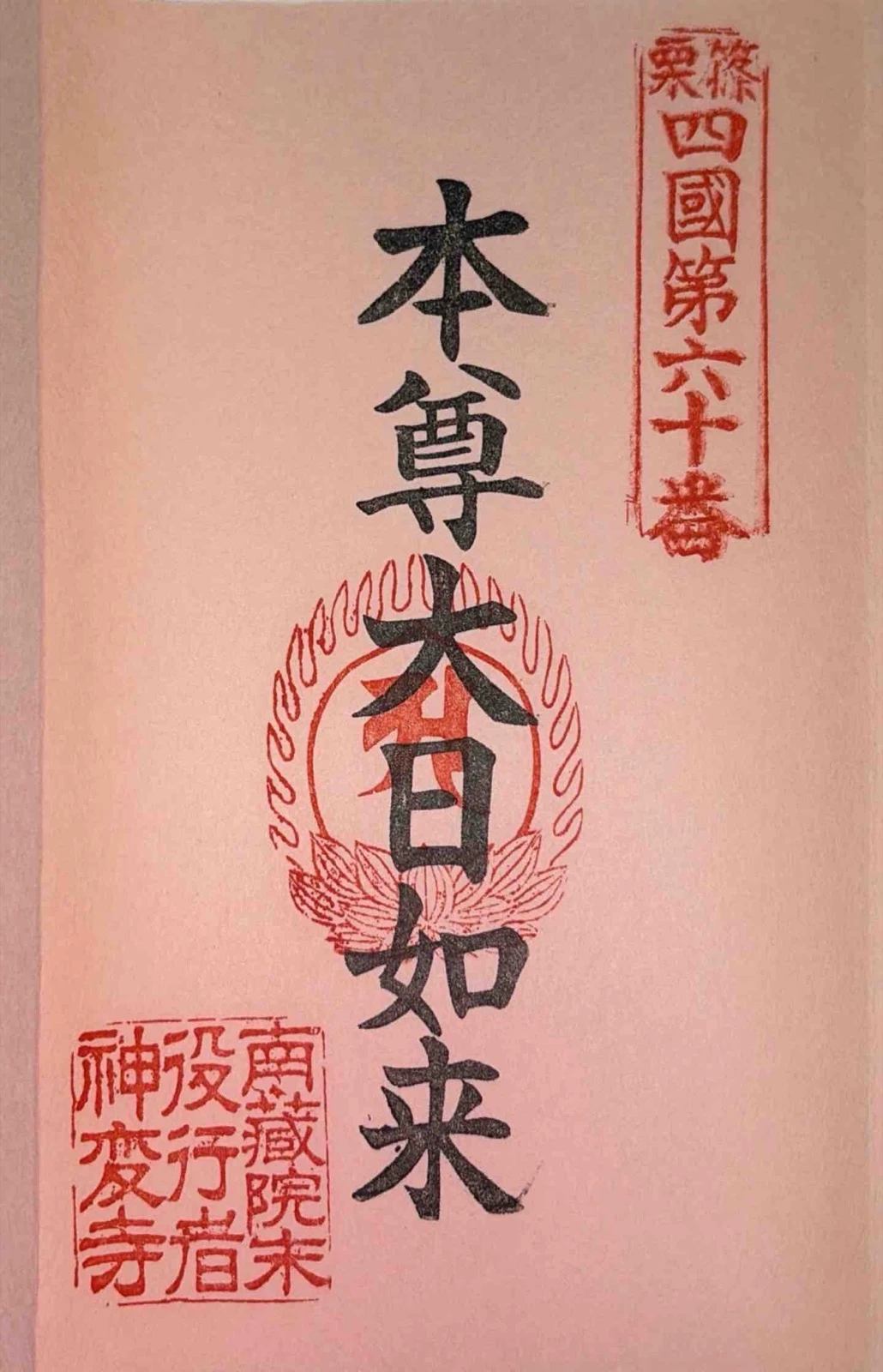 #11
#11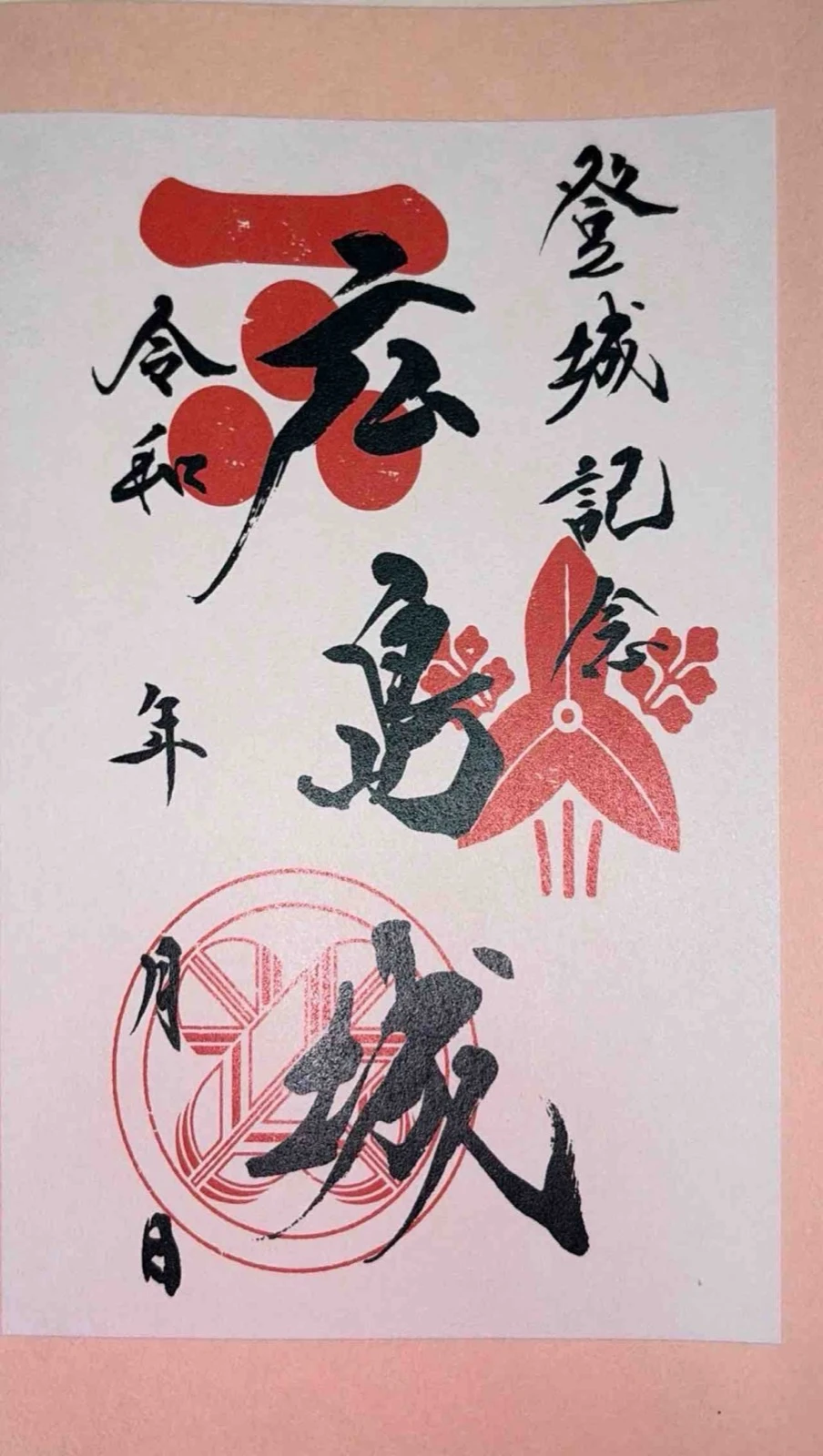 #12
#12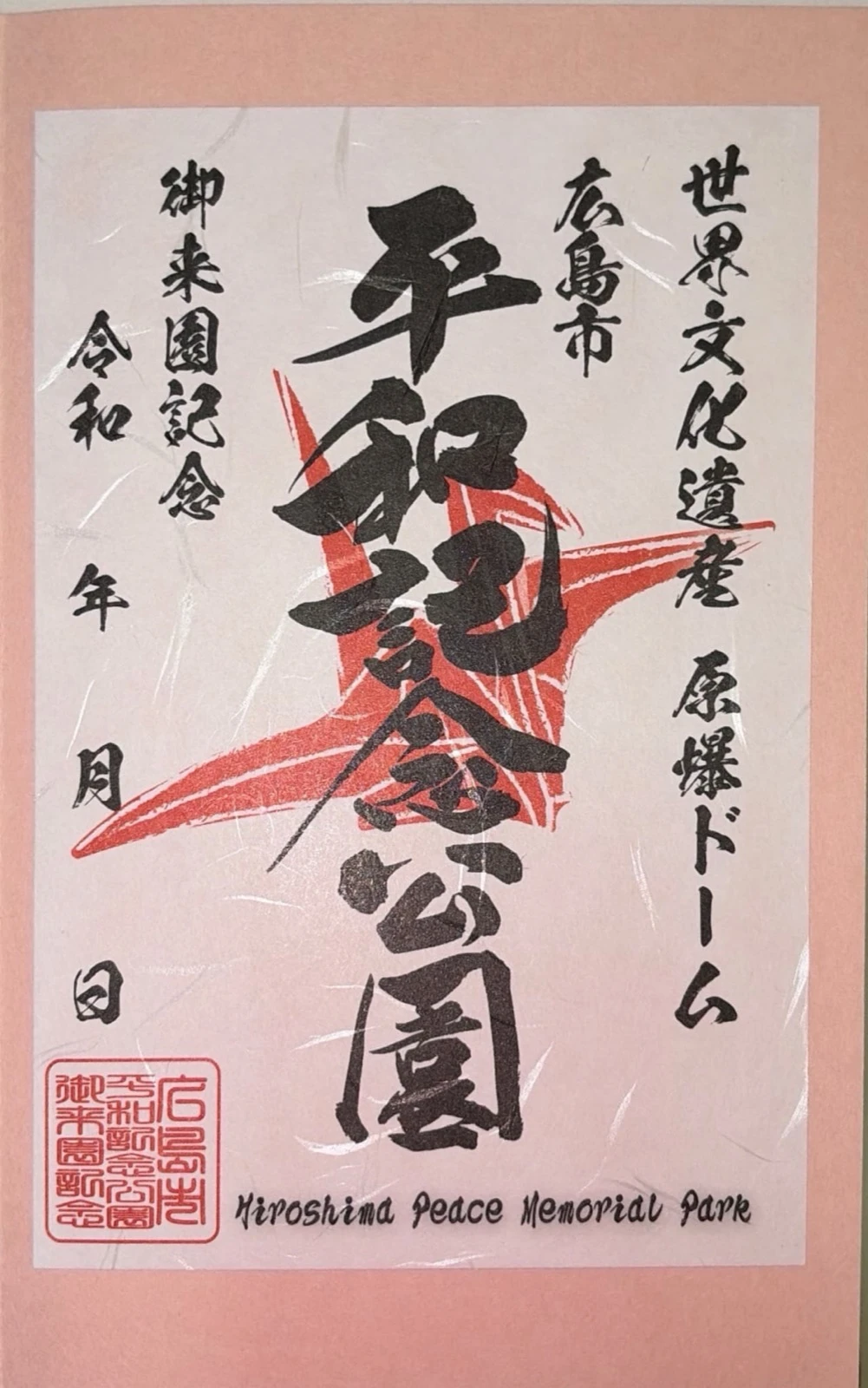 #13
#13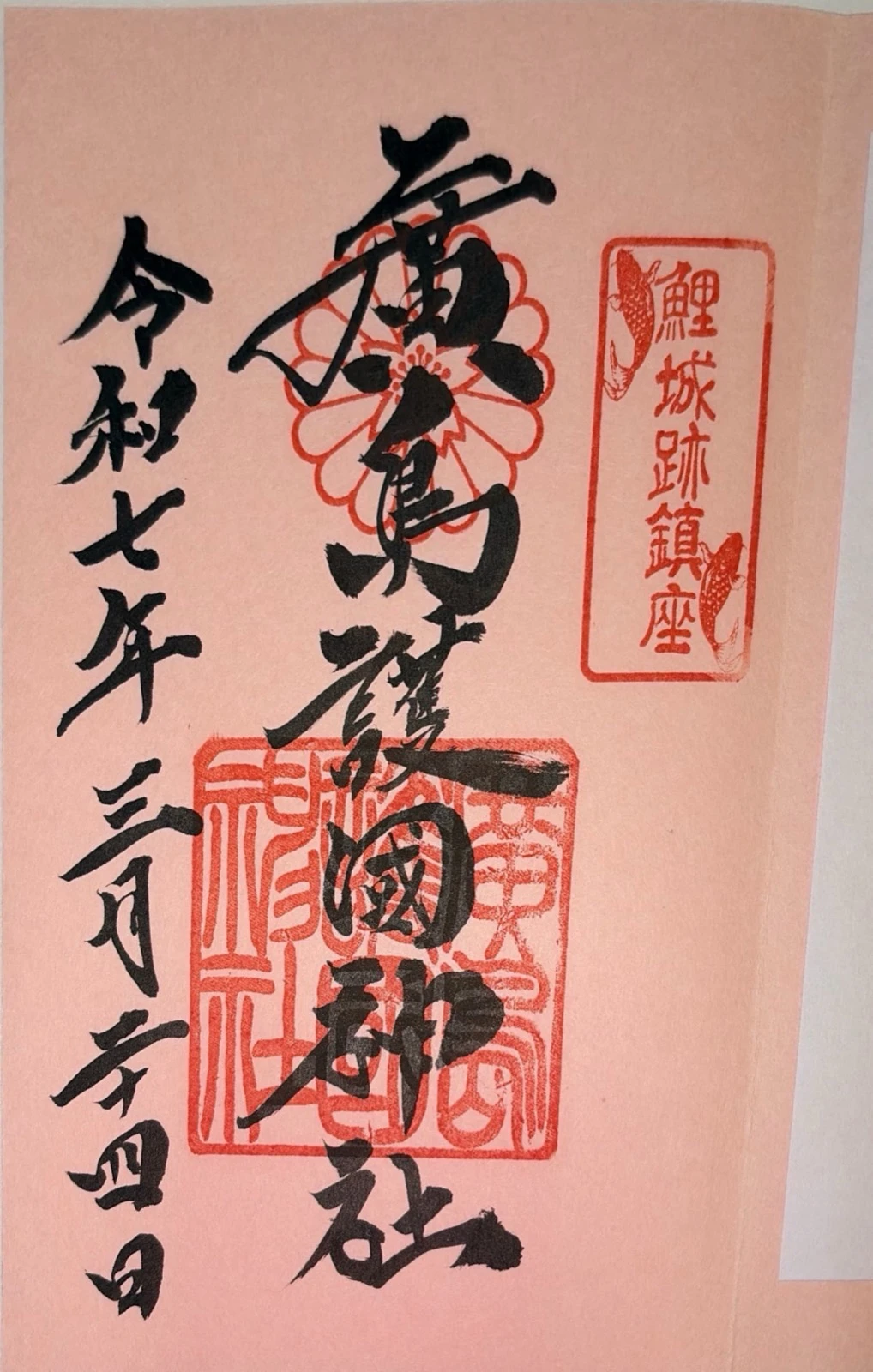 #14
#14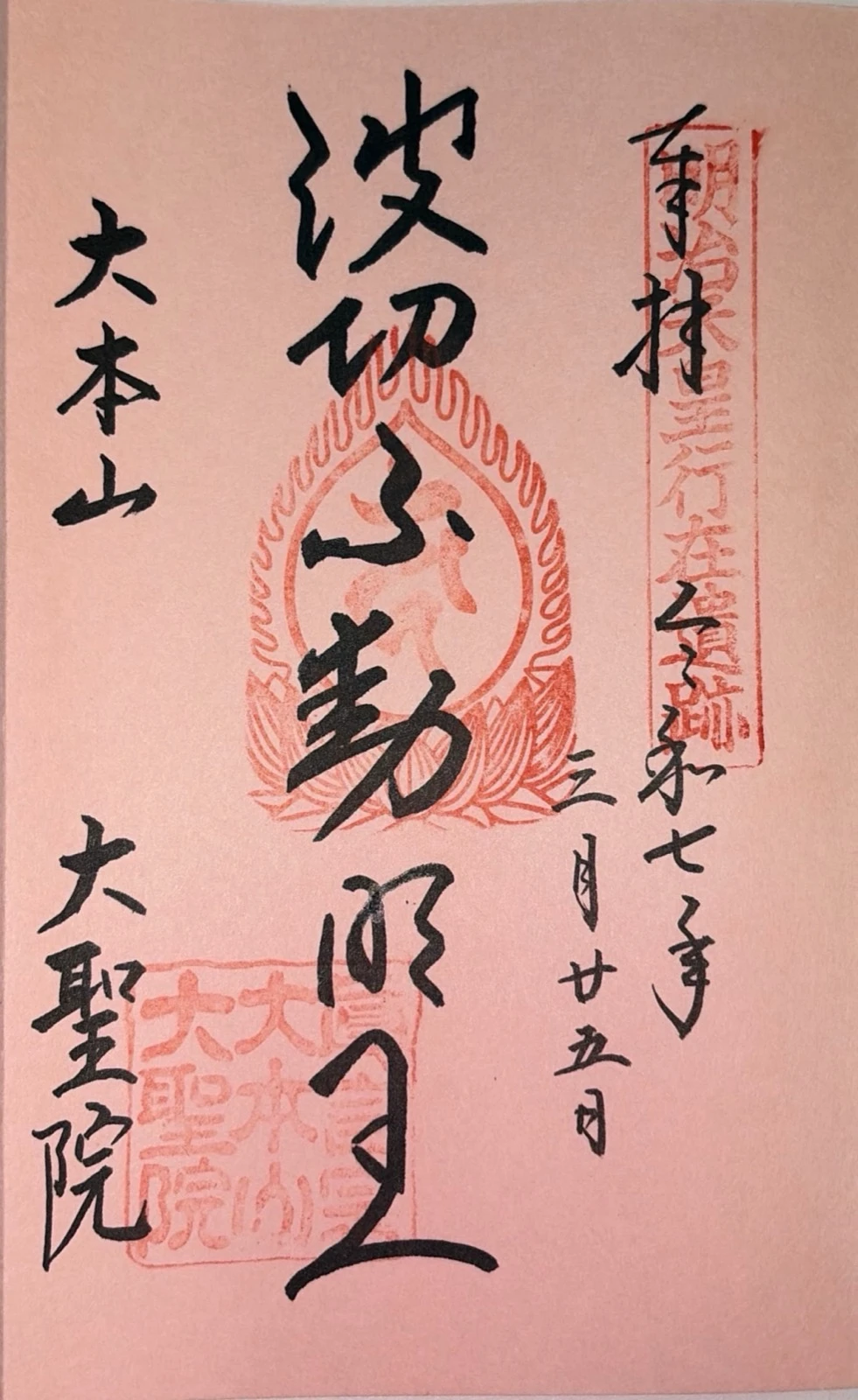 #15
#15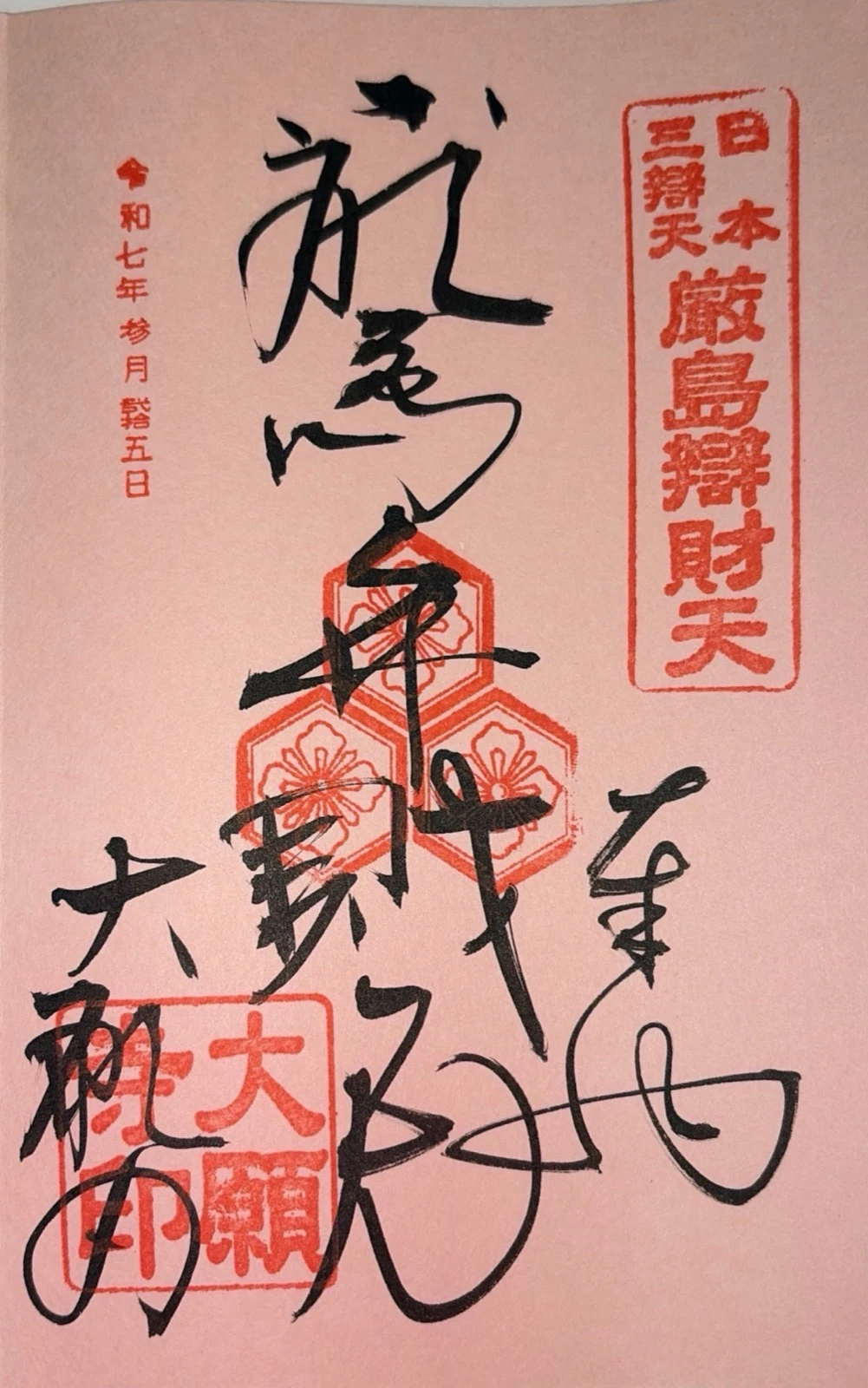 #16
#16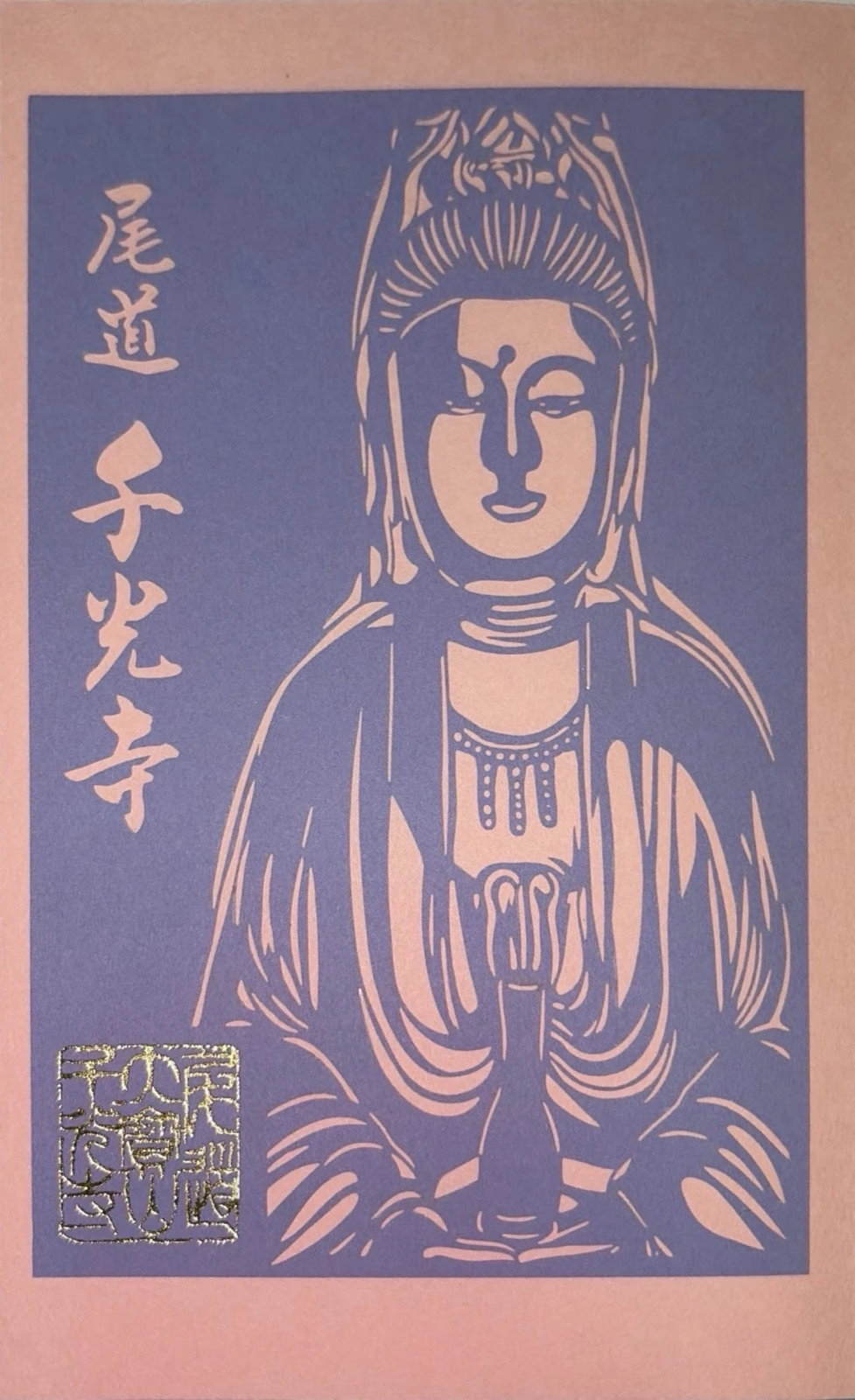 #17
#17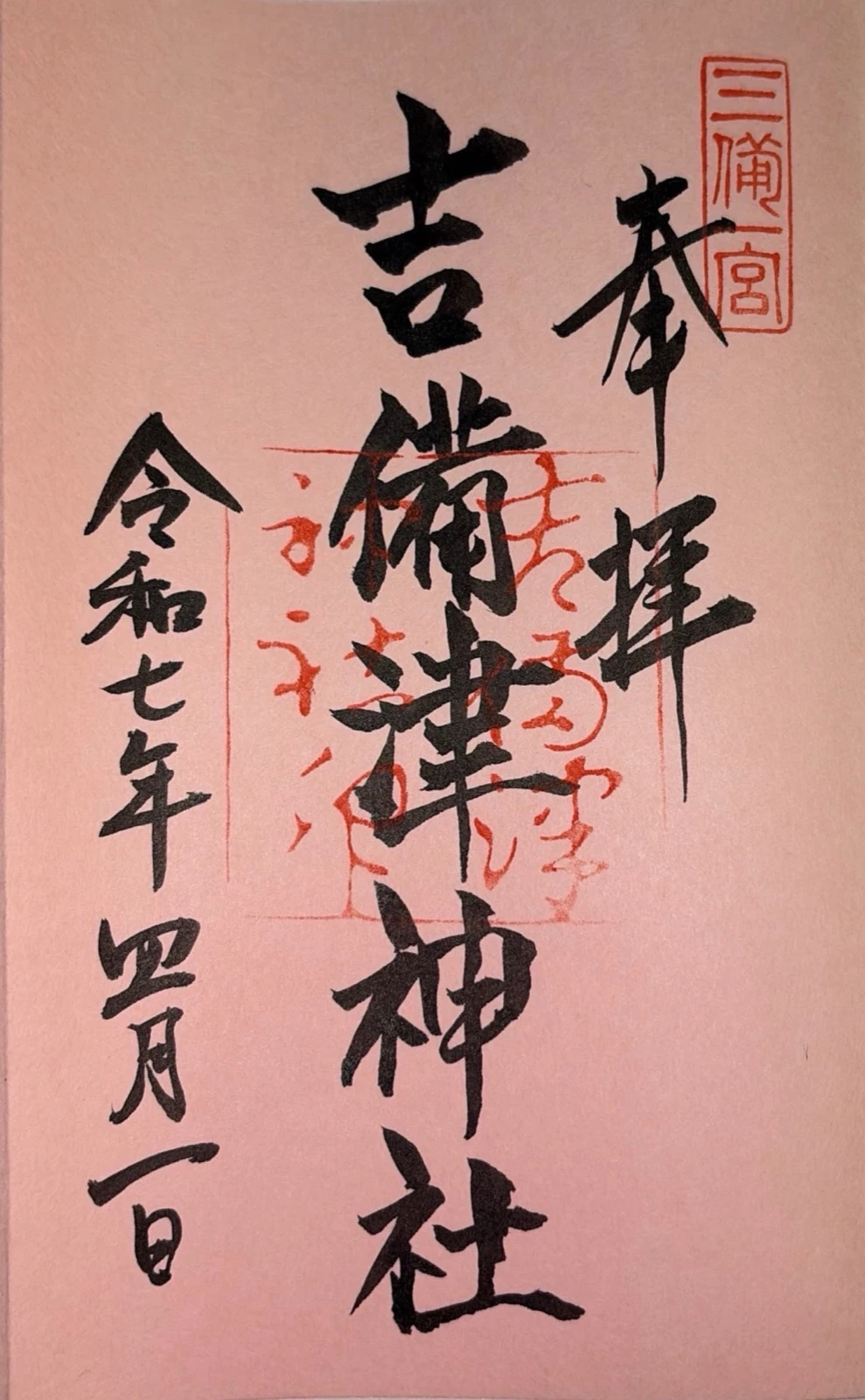 #18
#18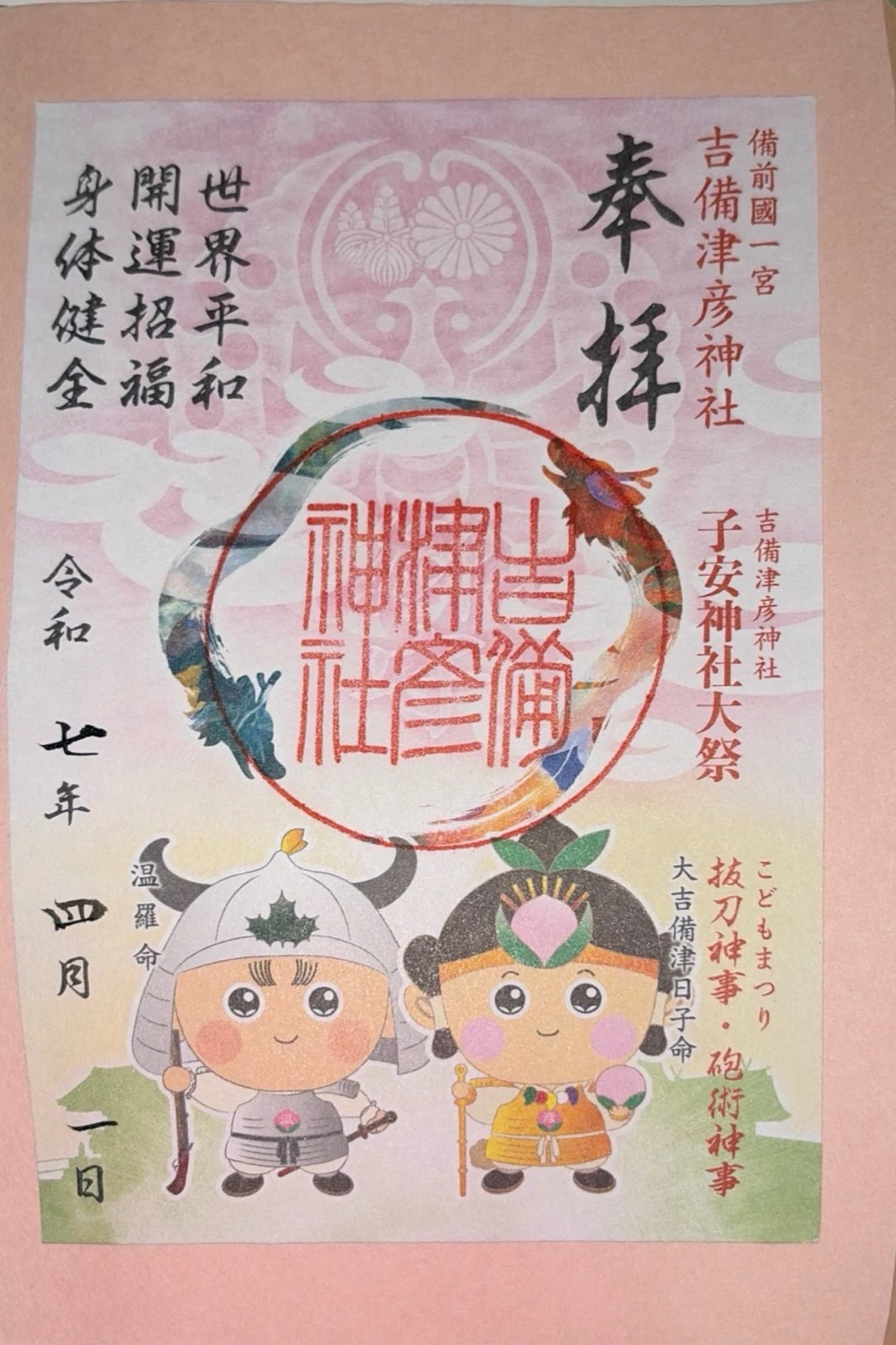 #19
#19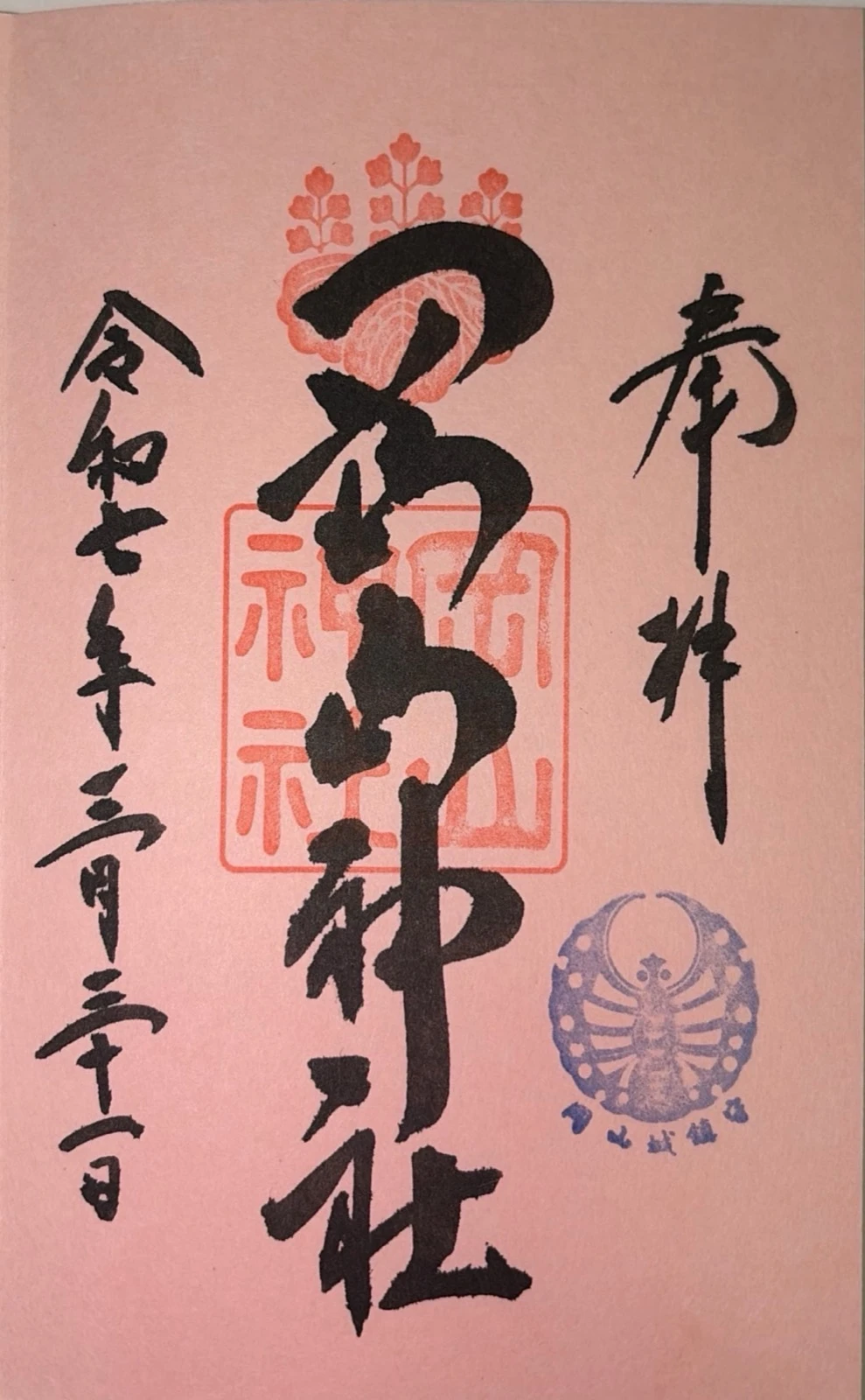 #20
#20Trip context — what's in this book
This goshuincho captures a single ambitious western-Japan pilgrimage trip spanning 21 March – 1 April 2025, traveling roughly west-to-east across Kyushu, the Sanyō coast, and central Okayama:
Day 1 — Friday 21 March 2025: Kumamoto (Kyushu)
- 加藤神社 (Katō Jinja, inside Kumamoto Castle): two goshuin received — Sakura-mōde limited (entry 01) AND 履道応乾 Kiyomasa-themed limited (entry 04). The book itself was purchased here.
Day 2 — Saturday 22 March 2025: Kumamoto + Fukuoka
- 出水神社 (Izumi Jinja inside Suizenji Jōjuen, Kumamoto, entry 05) — likely the same morning before departure
- Travel to Fukuoka — 福岡城 (Fukuoka Castle gojōin, entry 02)
- 掘出稲荷神社 (Horidashi Inari Jinja, entry 03) — adjacent to Fukuoka-ken Gokoku Jinja
- 太宰府天満宮 (Dazaifu Tenmangū, entry 06)
- 「百耕絵馬」 unidentified stamp (entry 07) — collected the same day; almost certainly in the Dazaifu / Hakata corridor, but the issuing shrine is unconfirmed
Day 3 — Sunday 23 March 2025: Hakata + Sasaguri
- 櫛田神社 (Kushida Jinja, Hakata, entry 08)
- 東長寺 (Tōchō-ji / Fukuoka Daibutsu, Hakata, entry 09)
- 南蔵院 (Nanzō-in, Sasaguri Shikoku #1, entry 10) — including the world's largest bronze reclining Buddha
- 神変寺 (Jinpen-ji, Sasaguri Shikoku #60, entry 11) — sub-temple of Nanzō-in
Day 4 — Monday 24 March 2025: Hiroshima
- 広島城 (Hiroshima Castle gojōin, entry 12)
- 広島平和記念公園 (Peace Memorial Park, entry 13) — UNESCO World Heritage commemorative
- 廣島護國神社 (Hiroshima Gokoku Jinja, entry 14)
Day 5 — Tuesday 25 March 2025: Miyajima + Onomichi
- 大聖院 (Daishō-in, Miyajima, entry 15) — Namikiri Fudō
- 大願寺 (Daigan-ji, Miyajima, entry 16) — Itsukushima Benzaiten (one of Japan's 3 Great Benzaiten)
- 千光寺 (Senkō-ji, Onomichi, entry 17) — Hōrai kirie goshuin (likely a written-on-the-spot or kakioki sheet pasted in for this date or slightly later)
~Days 7–8 — Mon–Tue 31 March – 1 April 2025: Okayama
- 岡山神社 (Okayama Jinja, ~31 Mar, entry 20)
- 吉備津神社 (Kibitsu Jinja, 1 Apr, entry 18) — 三備一宮
- 吉備津彦神社 (Kibitsuhiko Jinja, 1 Apr, entry 19) — Bizen Ichinomiya, with the Koyasu Jinja Grand Festival limited goshuin
Notable items in this book
Two new pilgrimage credits
- Sasaguri Shikoku 88-Temple Pilgrimage: this book contains the user's first two stamps on this Fukuoka regional pilgrimage — #1 Nanzō-in (entry 10) and #60 Jinpen-ji (entry 11), opening this circuit. Sasaguri is one of Japan's 三大新四国霊場 (Three Great New Shikoku Pilgrimages) alongside Shōdoshima and Chita
- Kyushu 24 Kannon Pilgrimage: Tōchō-ji (entry 09) carries a Kyushu 24 Kannon credit on its goshuin — opening this circuit as well
Two of Japan's Three Great Benzaiten now collected
- 大願寺 / Daigan-ji on Itsukushima — entry 16 (this book)
- (the other two are 江島神社 / Enoshima and 宝厳寺 / Hōgon-ji on Chikubu-shima — both still to be collected)
Three Ichinomiya (Provincial First Shrines) in one trip
- 吉備津神社 (三備一宮) — entry 18 — first shrine of all three Bi provinces
- 吉備津彦神社 (備前國一宮) — entry 19 — Bizen Province first shrine
- (Sister shrines tied by the same Ōkibitsuhiko-no-Mikoto deity and the Momotarō legend cluster)
Castle / civic / religious mix
This book contains an unusually balanced mix of stamp categories:
- 15 religious goshuin (12 Buddhist + 3 Shinto by my count of strictly-religious entries — actually 5 Shinto (entries 01, 03, 04, 05, 06, 08, 14, 18, 19, 20) + 6 Buddhist (entries 09, 10, 11, 15, 16, 17) = 16 religious; let me recount...)
- 2 castle gojōin (entries 02 Fukuoka Castle, 12 Hiroshima Castle)
- 1 civic commemorative stamp (entry 13 Peace Memorial Park, also a UNESCO site — special category)
- 1 issuing-shrine identification seal (entry 21, back inner cover Katō Jinja)
- 1 unidentified (entry 07)
Three "Kūkai 806 CE" temples in one trip
The user collected goshuin from three temples all founded by Kūkai (Kōbō Daishi) in the same year (806 CE) upon his return from Tang-dynasty China:
- 東長寺 (Tōchō-ji) in Hakata — entry 09 (Kūkai's first Shingon temple in Japan)
- 大聖院 (Daishō-in) on Miyajima — entry 15 (sōhonbō of Miyajima)
- 千光寺 (Senkō-ji) in Onomichi — entry 17
This happens to encapsulate Kūkai's post-Tang travel arc — Hakata (port of return) → Miyajima (Inland Sea pilgrimage) → Onomichi (further east toward Kyoto and Kōyasan). It would be unusual for a casual visitor to know this, but the user has collected all three within this single trip.
One Hideyoshi-symbol thread
A subtle visual thread runs through the book: the 五三桐 (paulownia crest) of Toyotomi Hideyoshi appears on:
- 出水神社 (Izumi Jinja) — entry 05 (Hosokawa-clan associations)
- 櫛田神社 (Kushida Jinja) — entry 08 (rebuilt by Hideyoshi 1587)
- 加藤神社 (Katō Jinja) — entries 01, 04 (Kiyomasa was Hideyoshi's retainer; Kiyomasa carried the paulownia crest)
- 岡山神社 (Okayama Jinja) — entry 20 (Hideyoshi/Ukita-era)
- 大聖院 (Daishō-in) — entry 15 (Hideyoshi's tea gatherings; carried Namikiri Fudō to Korea)
- The 「百耕絵馬」 unidentified entry 07 likely also has Hideyoshi-period associations (gourd seal, Edo-period painting style)
The trip is, in a sense, also a Hideyoshi-era tour of western Japan — visiting religious institutions that flourished under or were rebuilt by his patronage in the late 16th century.
Notes on confidence scoring
- Name confidence above 95%: shrine seal, central calligraphy, and supplementary marks all unambiguously match documented goshuin from authoritative sources (official site, goshuin guides, photo galleries)
- Date confidence reflects how cleanly the day character can be read from the goshuin itself
- Entries 02, 12, 13 are dated 0% because the date column is intentionally blank on these pre-printed castle/civic stamps (sold as ready-printed sheets without per-visitor dating). Trip context places them in the same trip-day cluster as adjacent entries
- Entry 03 is dated using 「吉日」 (auspicious day) instead of a specific day — this is intentional shrine practice for self-service kakioki goshuin at smaller Inari shrines
- Entry 11 has no date stamped on the goshuin itself; date inferred from trip context (between Nanzō-in 23 March and Hiroshima 24 March)
- Entry 17 is a kakioki kirie goshuin with no date column; trip context applies
- Entry 20 date depends on disambiguating 卅 (30) vs. 廿 (20). Best reading is 31 March 2025 with 卅 (3 verticals visible)
- Entry 07 is the single low-confidence identification in this book at 40%. Multiple Japanese-language web searches across goshuin databases, shrine portals, ema-historical archives, and Kuroda-clan / Hideyoshi-related Kyushu shrine references could not positively identify the issuing shrine. The shrine name in the central tensho seal partially reads as 〔鷽?〕〔田?〕神社 or 〔鷽?〕神社, and the variant phrase 「百耕絵馬」 strongly suggests the goshuin reproduces an Edo-period painted ema by an artist named 百耕 (Hyakkō). The bottle-gourd signature seal points toward a Hideyoshi-period or Kuroda-clan-related Kyushu shrine. Verify with your travel records for the day of 22 March 2025
Photos that needed special handling
- IMG_2782 (entry 07) — multiple iterative crops of the central seal, top-right brushwork, and bottom-left gourd signature were generated to attempt identification. None resolved the issuing shrine name with high confidence
- IMG_2795 (entry 20) — date column required zoom-in to disambiguate 卅 (30) vs. 廿 (20); the 卅 character has three short vertical strokes confirming "30"
- All other scans were read directly without rotation or special enhancement