Goshuincho 1 — Imado Jinja Maneki-Neko
Tokyo, Kyoto, Osaka & Nagoya · 2023–2025
6 stamps·2023–2025
This goshuincho was purchased at 今戸神社 (Imado Jinja) in Asakusa, Tokyo. The cover features two paired maneki-neko on a navy blue background with a triple-comma (mitsudomoe) pattern; the back features Fukurokuju, the Asakusa Shichifukujin god of longevity and wisdom enshrined at Imado.
The Stamps
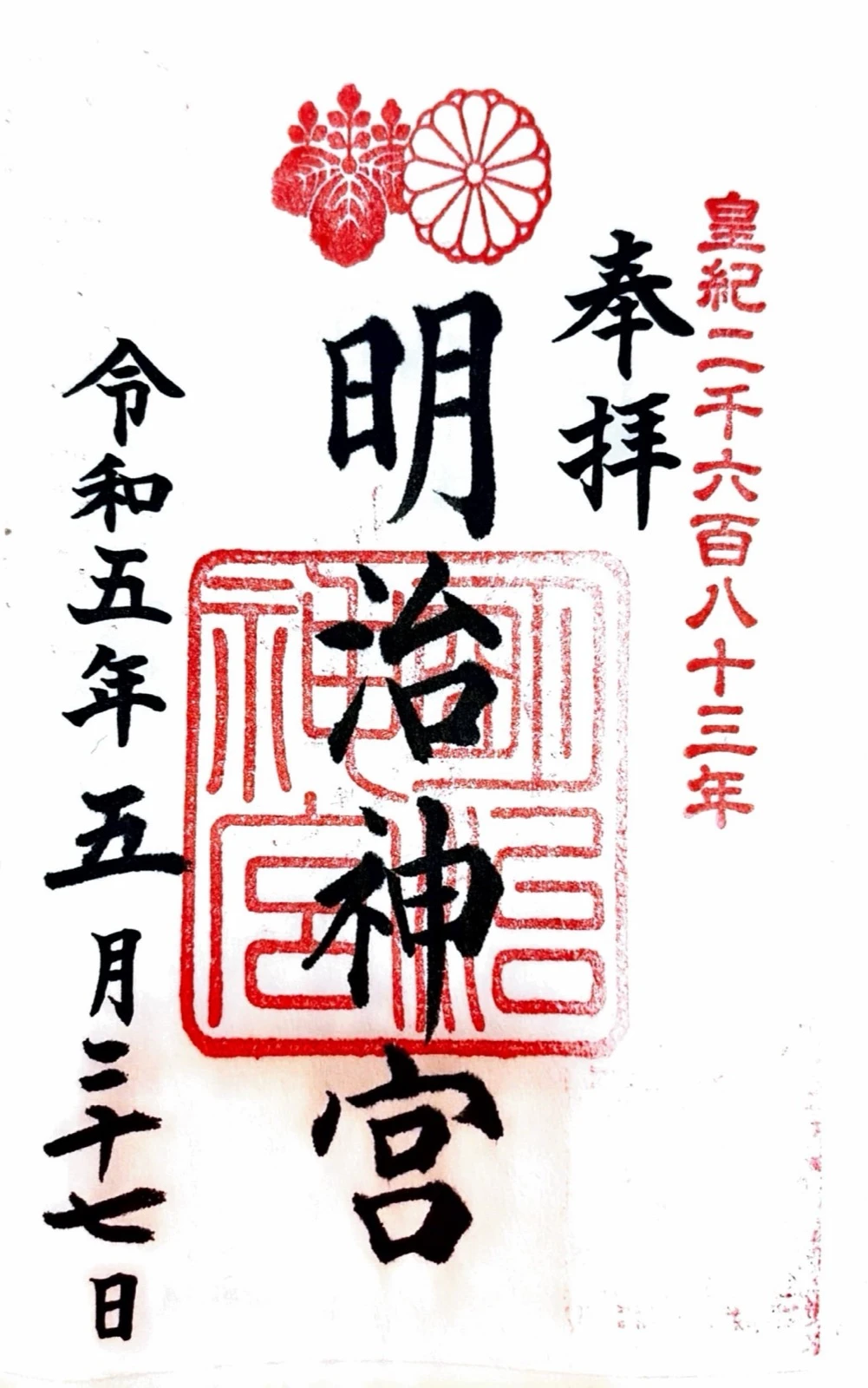 #01
#01明治神宮
Meiji Jingū
Shinto shrine·27 May 2023
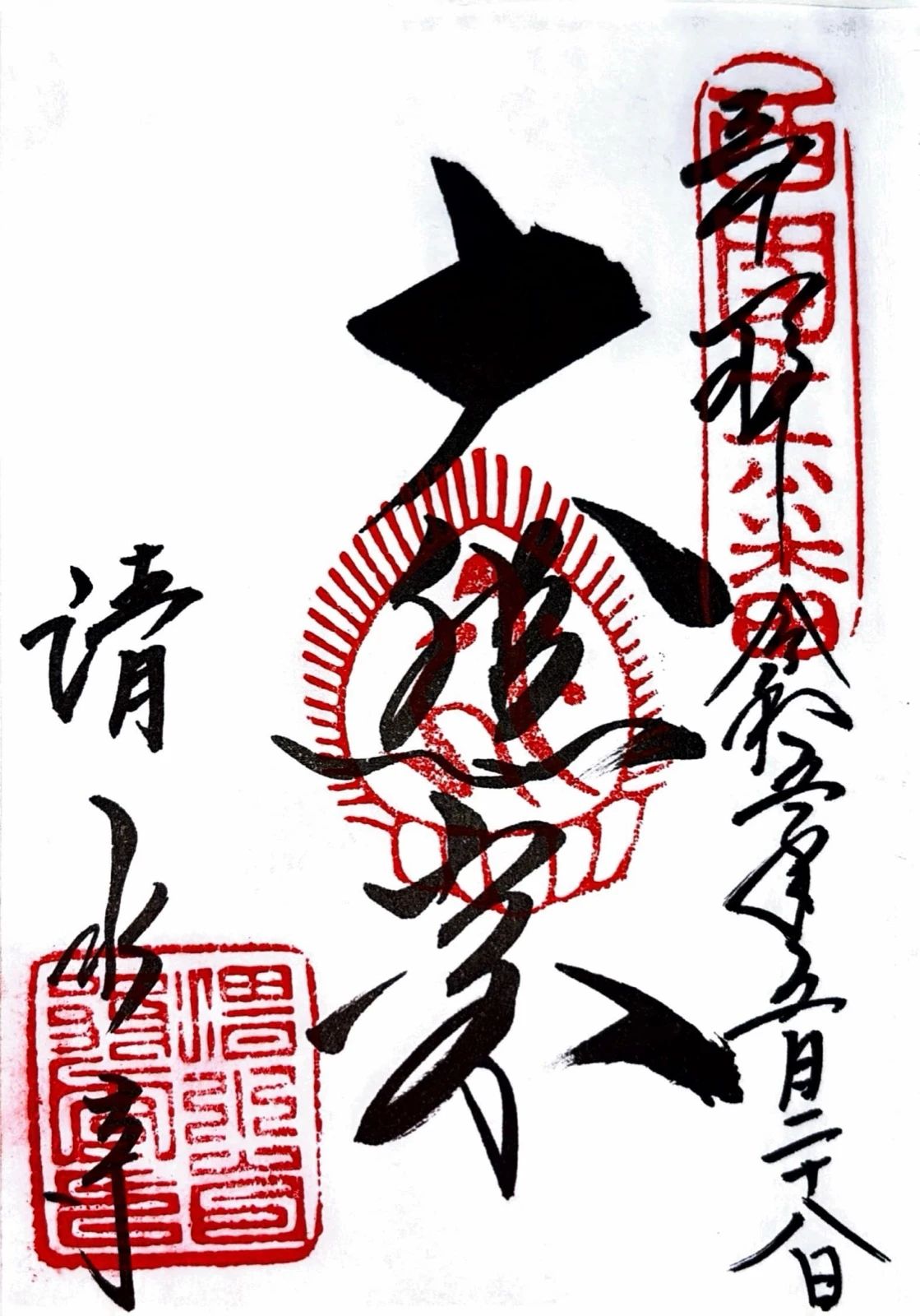 #02
#02清水寺
Kiyomizu-dera
Daihikaku
Buddhist temple — Saigoku 33 #16·~28 May 2023 (day uncertain)
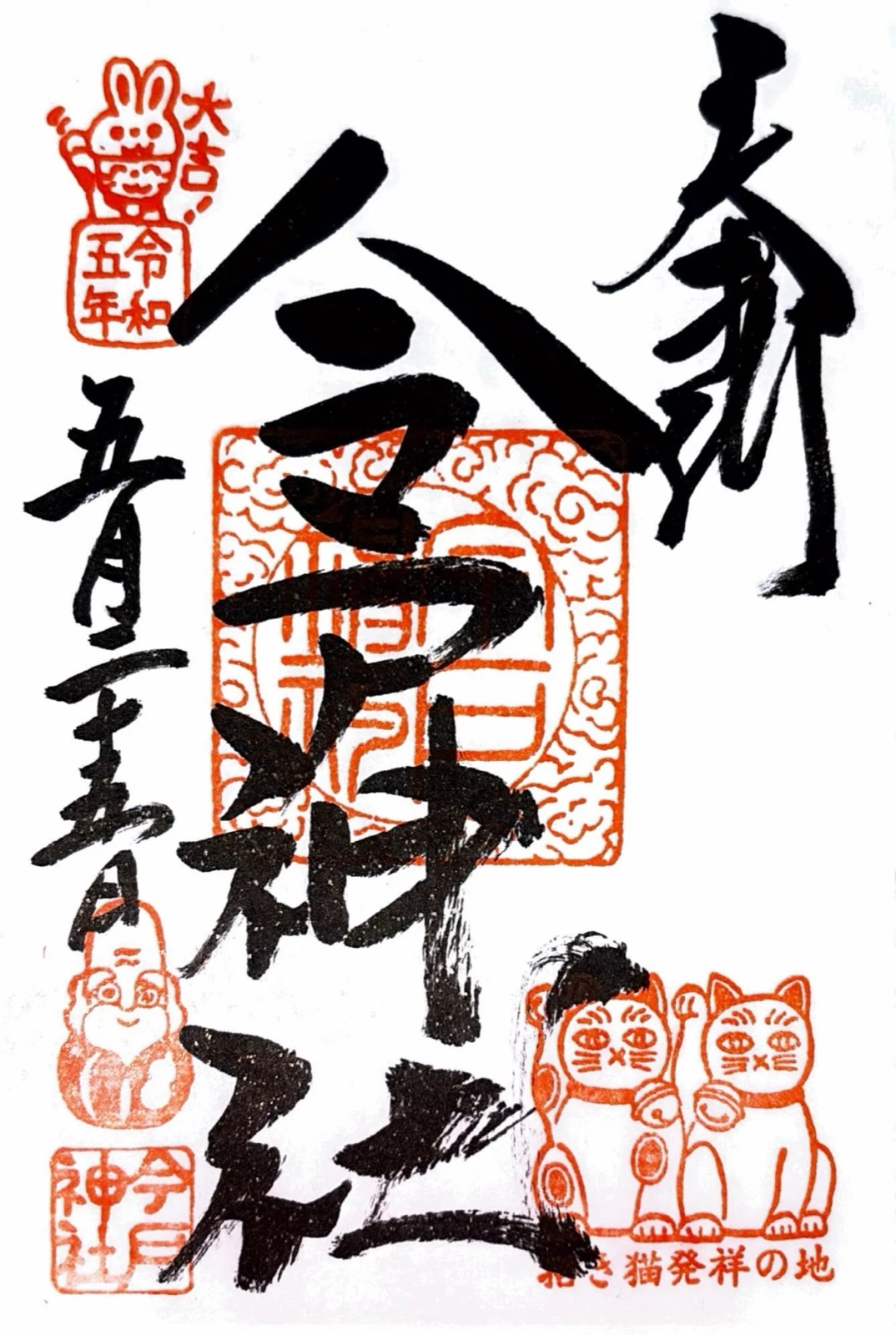 #03
#03今戸神社
Imado Jinja
Shinto shrine·~25 May 2023
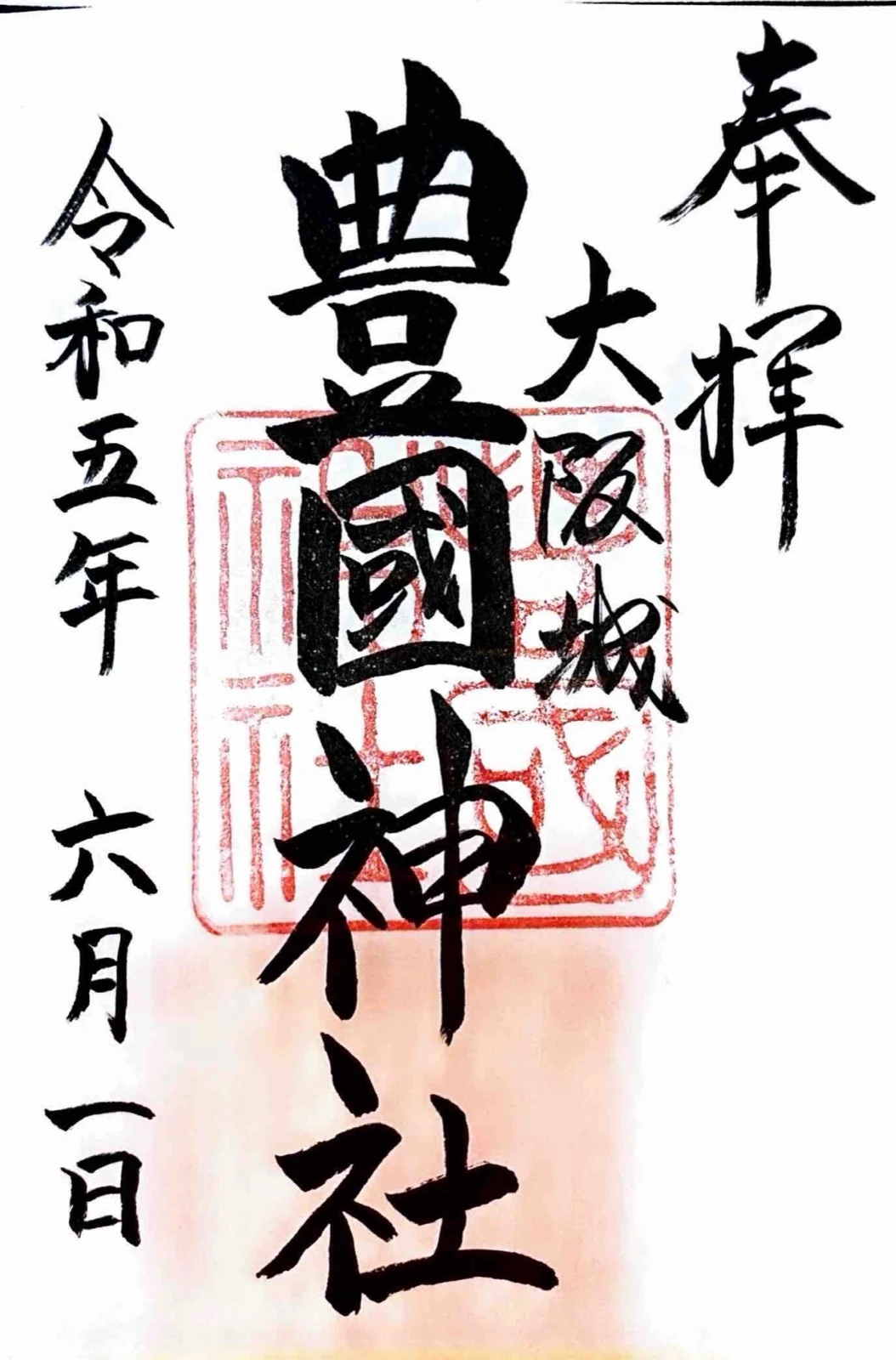 #04
#04大阪城豊國神社
Ōsaka-jō Hōkoku Jinja
Shinto shrine (in Osaka Castle Park)·1 June 2023
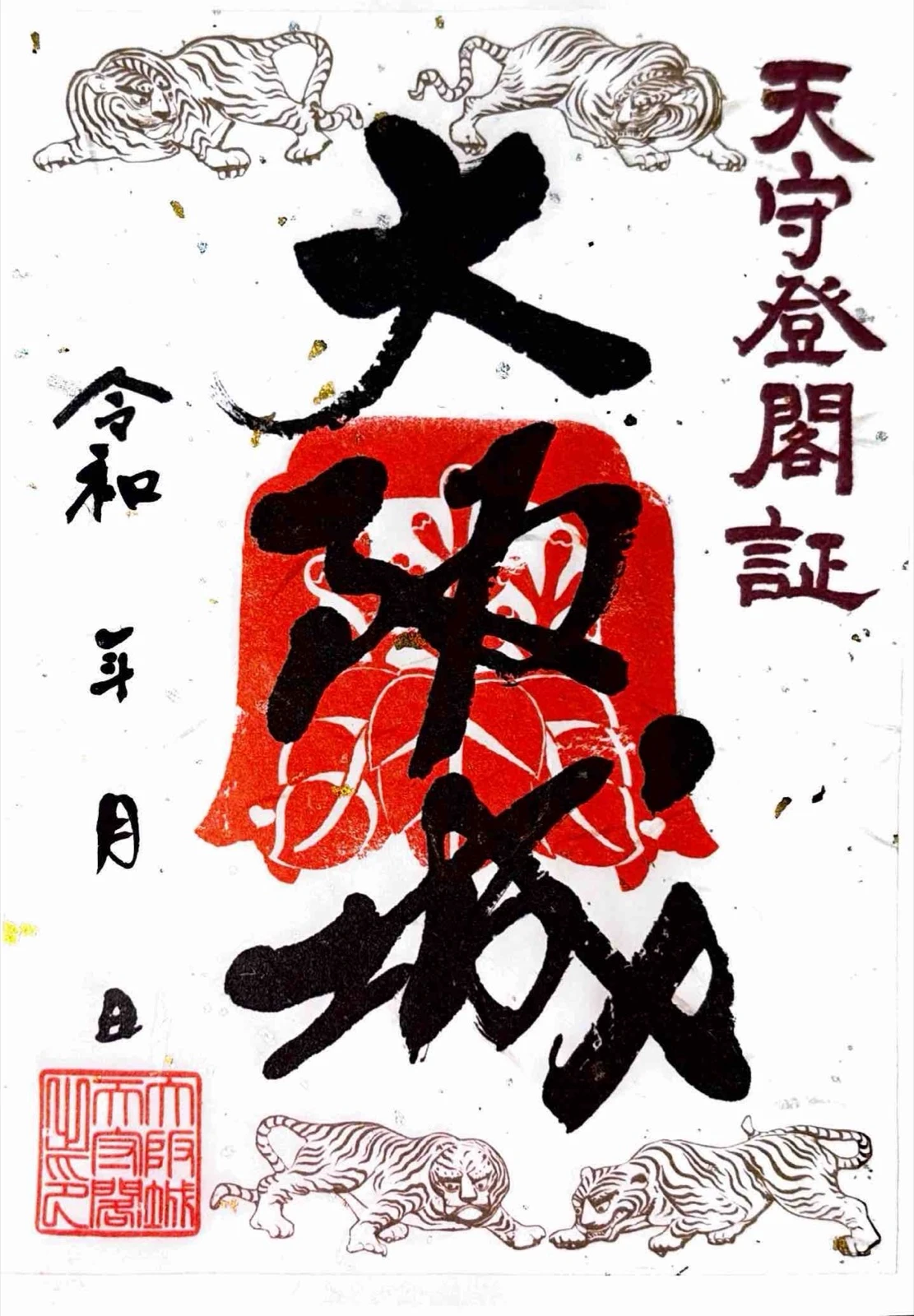 #05
#05大阪城天守登閣証
Osaka Castle Keep Climbing Certificate
Castle stamp (gojōin)·~1 June 2023 (day faintly written)
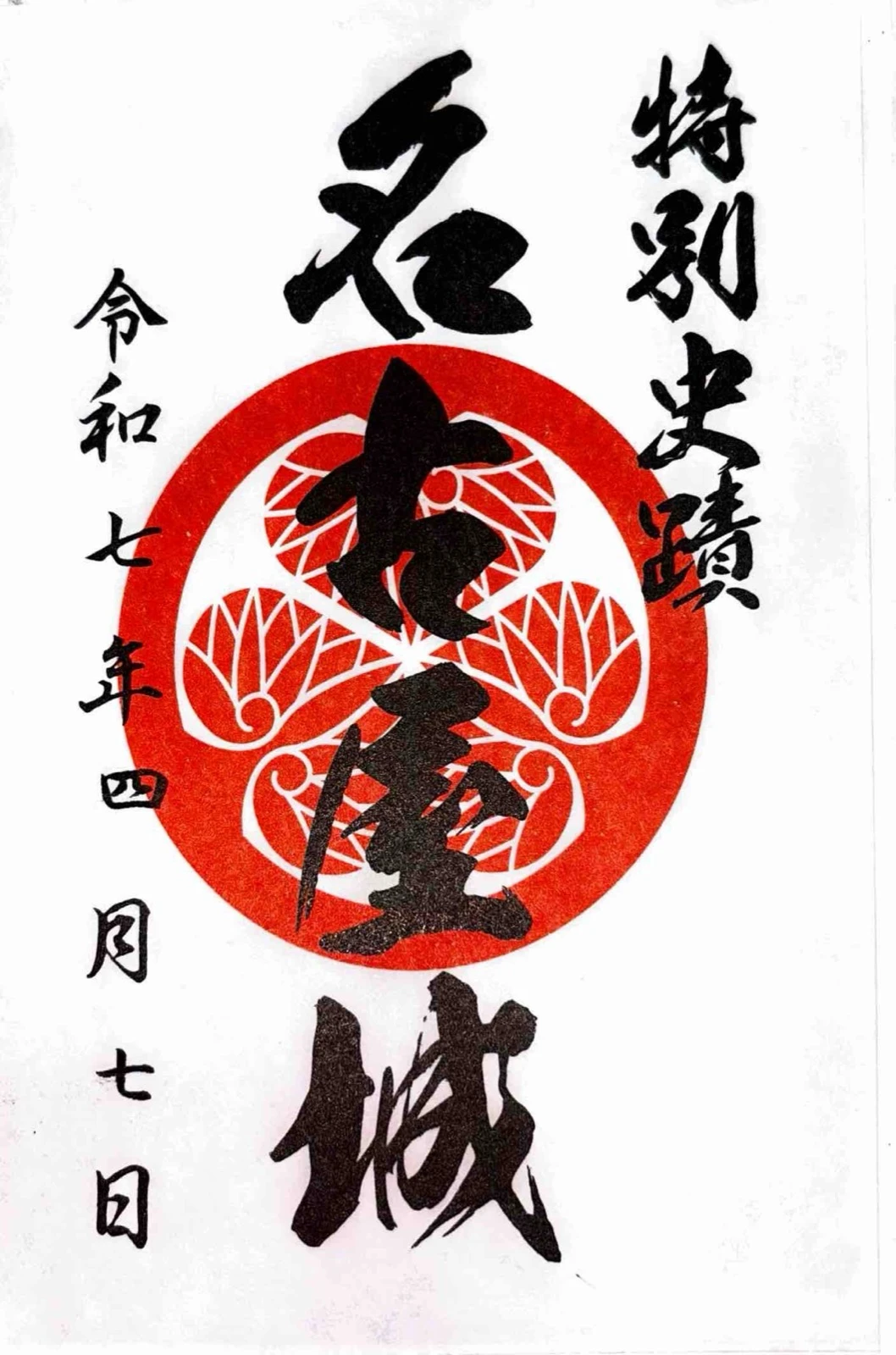 #06
#06名古屋城
Nagoya Castle
Castle stamp (gojōin)·7 April 2025
Trip Notes
Quick context — what's in this book
This goshuincho spans two trips:
- Late May / early June 2023 — A combined Tokyo + Kyoto + Osaka itinerary. Tokyo first (Imado Jinja in Asakusa, Meiji Jingū in Shibuya), then west to Kyoto (Kiyomizu-dera in Higashiyama), then Osaka (Hōkoku Jinja and Osaka Castle Keep in Osaka Castle Park).
- April 2025 — Nagoya Castle, ~22 months later, during cherry-blossom season.
Three of the six stamps are religious (Meiji Jingū, Kiyomizu-dera, Imado Jinja); the remaining three trace the user's interest in Japanese castles (Hōkoku Jinja sits inside Osaka Castle, plus the Osaka and Nagoya castle-keep certificates).
Notes on confidence scoring
- Temple/shrine name confidence reflects how certain I am that I've identified the issuing site correctly. Above 95% means cross-referenced with multiple authoritative sources (official site, goshuin guides, photo galleries) AND the seal/calligraphy is unambiguous.
- Date confidence reflects the specific day reading from the goshuin itself, not the year. A date below 70% generally means the day character is partly obscured, faintly inked, or written in a style that admits multiple readings — in those cases trip context (adjacent goshuin dates, geography) is used to estimate, but the goshuin alone wouldn't be sufficient.
- I mark anything below 50% as "uncertain — confirm with your records" rather than asserting it confidently.
Two notable items in this book
- Imperial-year stamping (Meiji Jingū): the imperial year (皇紀 2683) is rarely stamped on goshuin — Meiji Jingū does it because it enshrines an emperor.
- Kiyomizu-dera Daihikaku: the central calligraphy names the hall, not the temple — this is the standard pattern for the Saigoku 33 Kannon Pilgrimage temples.